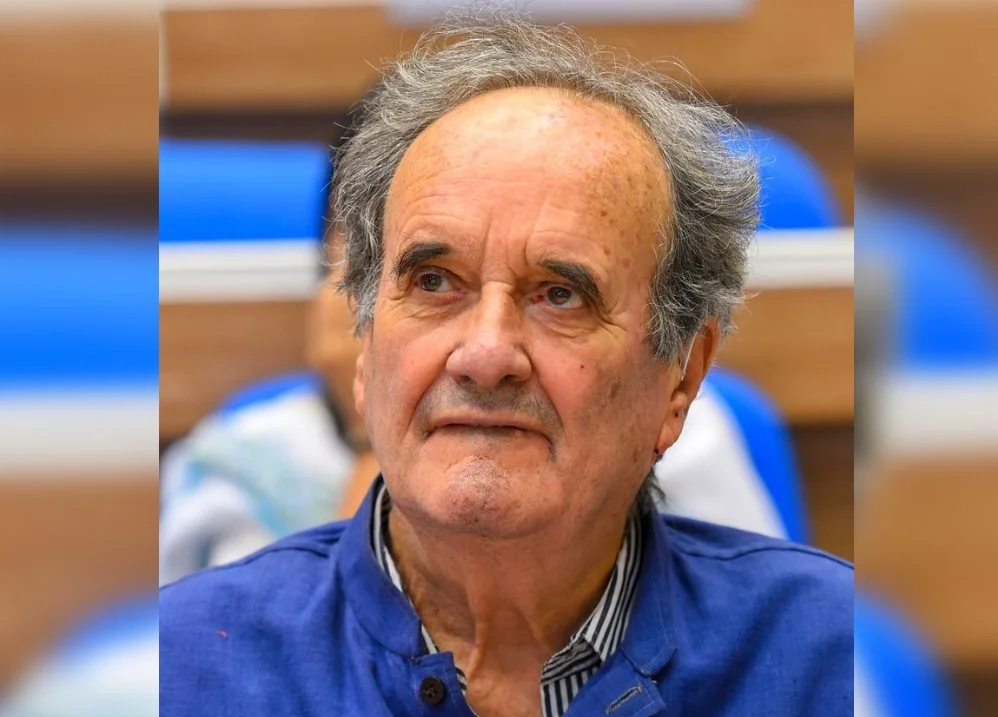


New Delhi, Jan 25: Sir William Mark Tully, the legendary voice of the BBC who chronicled the evolution of modern India for decades, died in New Delhi on Saturday. He was 90.
The veteran journalist suffered a stroke on Friday evening and was admitted to a private hospital in the capital, where he passed away in the afternoon, according to family sources. Tully, who served as the BBC Bureau Chief in New Delhi for 20 years, remained a resident of India long after his formal retirement, splitting his time between Delhi and McLeodGanj.
Born in Tollygunge in 1935, Tully often reflected on his unique position in the country he adopted as his home. “I am the last relic of the Raj,” he once jokingly noted, referring to his deep ties to the subcontinent that spanned from his birth to his influential career.
His tenure was marked by some of the most significant events in Indian history. After arriving in New Delhi in 1965, his first major assignment was covering the funeral of Prime Minister Lal Bahadur Shastri. His reporting became a staple for millions of listeners during an era when radio was the primary source of information.
The UNESCO Courier previously described Tully as a “living witness” to a time of rudimentary technology. The dispatch mentioned that he worked through a period when “radio recordings were made on magnetic tapes that had to be physically sent to the editorial offices.”
Tully’s career was not without friction with the establishment. During the tenure of Prime Minister Indira Gandhi, the BBC faced multiple shutdowns and restrictions. In 1975, he was forced to withdraw from India, subsequently moving to East Pakistan where he became one of the few journalists to gain early access to the region. During this period, he also interviewed Sheikh Mujibur Rahman.
Upon his return to India in 1977, he covered the aftermath of the Emergency and the eventual return of Indira Gandhi to power. He was a primary source of information during Operation Blue Star, having spoken directly with Jarnail Singh Bhindrawale shortly before the military action at the Golden Temple.
Beyond the microphone, Tully was a prolific author of nine books, including the acclaimed “No Full Stops in India” and “Amritsar: Mrs Gandhi’s Last Battle.” His work often explored the intersection of his Anglican faith and the pluralistic nature of Indian society.