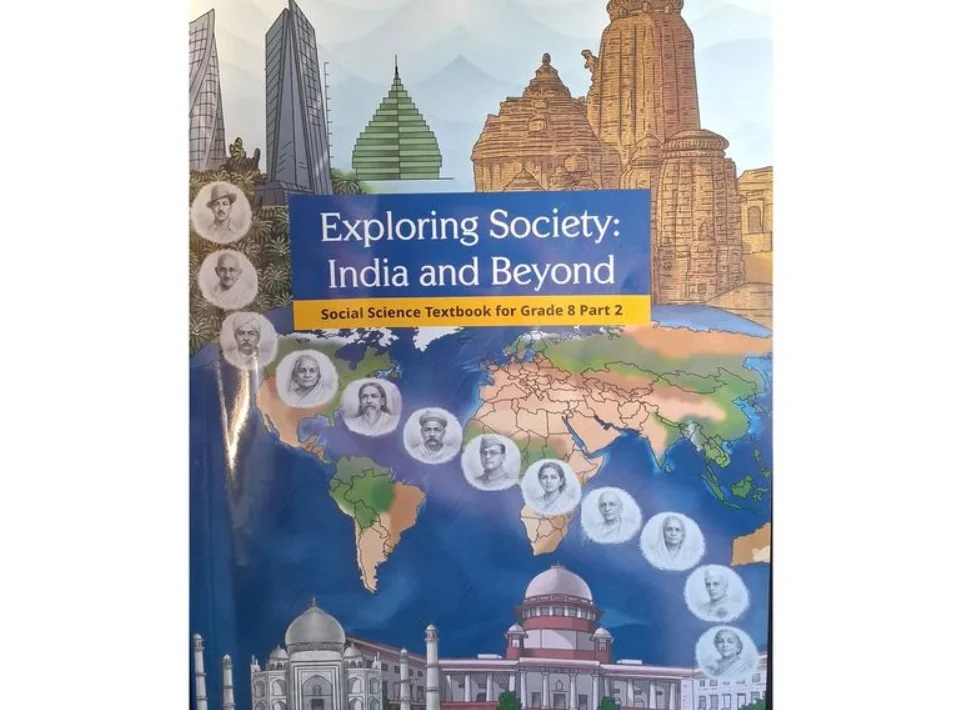


New Delhi, Feb 24: The National Council of Educational Research and Training (NCERT) has incorporated a dedicated section on “corruption in the judiciary” within its updated Class 8 Social Science textbook. This addition represents a notable departure from previous editions, which primarily detailed the structural hierarchy and procedural roles of the Indian legal system.
The revised chapter, titled “The Role of the Judiciary in Our Society,” outlines the various hurdles currently facing the legal framework, including systemic corruption and an extensive backlog of legal proceedings. Data included in the text indicates approximately 81,000 cases are pending in the Supreme Court, while 62.4 lakh cases remain unresolved in High Courts and 4.7 crore cases are stalled in district and subordinate courts.
Regarding ethical standards, the textbook asserts that judges are bound by a strict code of conduct governing both their professional and private lives. It further explains the existence of internal accountability measures, specifically referencing the Centralised Public Grievance Redress and Monitoring System (CPGRAMS) for filing formal complaints. Records cited in the book indicate that over 1,600 complaints were registered through this portal between 2017 and 2021.
The publication also details the constitutional process for removing members of the bench. “In cases where the allegations are serious, Parliament can take action and remove a judge by passing a motion of impeachment,” the text declares. It further notes that such motions are only entertained following a formal inquiry where the judge receives a fair opportunity to present a defense.
Acknowledging the real-world impact of these issues, the chapter states that citizens do encounter corruption at different levels of the legal system. The authors maintained that for marginalized and impoverished communities, these instances significantly worsen the difficulty of accessing justice.
To provide historical context, the textbook references former Chief Justice of India B R Gavai. Speaking in July 2025, Gavai affirmed that misconduct within the legal system negatively affects public confidence. “However, the path to rebuilding this trust lies in the swift, decisive and transparent action taken to address and resolve these issues,” he asserted, adding that transparency and accountability remain essential democratic virtues.