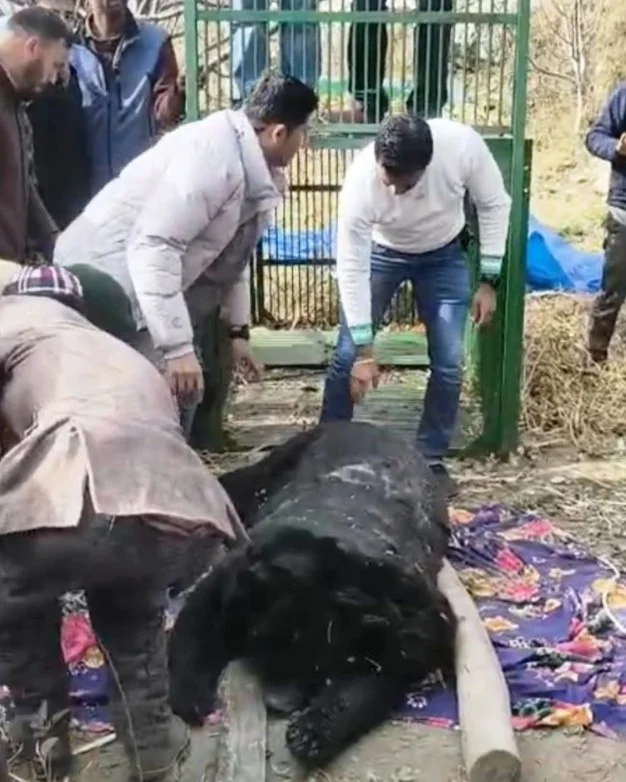


SHIMLA, Dec 16 — Bear attacks on livestock have increased sharply over the past decade in upper Shimla districts, particularly during the winter months when the animals traditionally enter hibernation, wildlife experts and forest officials said.
Officials say the attacks peak in November and December, a period when bears are now increasingly active due to changing weather patterns. “Climate change seems to have disturbed the bears’ hibernation cycle,” said Gurharsh Singh, divisional forest officer of Rampur. “If food is easily available or winters are not harsh enough, they are less likely to hibernate.”
The problem has become acute in several panchayats of the Rampur subdivision and the Kotgarh area, where bears have killed multiple cows in recent years by breaking into cowsheds.
“There are three key conditions required for bears to go into hibernation — low temperatures, adequate snowfall and scarcity of food,” said S. Sathyakumar, a noted bear expert and former scientist at the Wildlife Institute of India, Dehradun. “Over the years, snowfall has become scanty and winters are not cold enough. The absence of these conditions appears to have altered their hibernation cycle.”
As natural food sources such as fruits, berries, roots and leaves become scarce in forests during winter, bears increasingly move toward human settlements. “Since bears are not hibernating and food availability in the forests is low, they venture out in search of food,” Sathyakumar said. “They rummage through garbage dumps and increasingly attack livestock.”
Forest officials have advised residents to strengthen cowsheds to reduce losses.