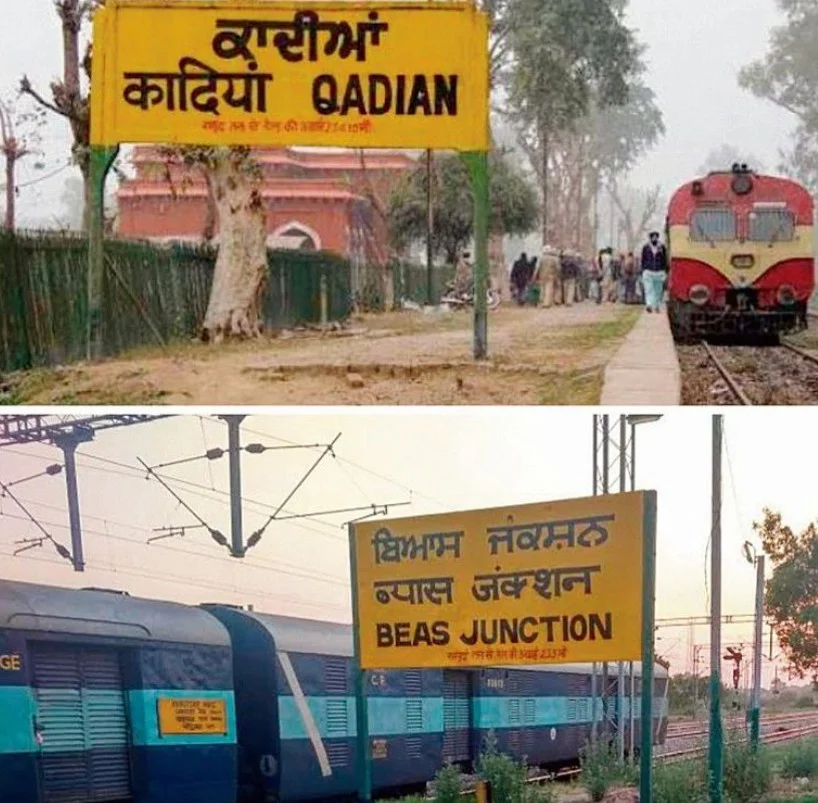


Chandigarh, August 16: The Union Government has greenlit a detailed estimate of Rs 1,419.05 crore for the construction of a 39.68-kilometer broad-gauge railway line linking Qadian in Gurdaspur district to Beas in Amritsar district. Senior BJP leader and former Union Minister of State for Railways Ravneet Singh Bittu confirmed the official Railway Board sanction on Sunday, describing the decision as a landmark breakthrough for the connectivity landscape of the Majha region.
The proposed corridor will traverse several key localities including Dhapai, Ghuman, Butala, and Sathiala, integrating previously unlinked agricultural and trade hubs into the broader national railway grid.
“I personally pursued this long-pending project and ensured that the Qadian-Beas line, which remained stuck for years, was defrozen and brought back into active consideration,” Bittu declared while detailing the historical progression of the rail link.
Tracing its origins back to 1928–29 under the British administration, the project faced abandonment in the early 1930s despite substantial initial earthwork. Although revived under a socially desirable connectivity program in 2010–11, technical hurdles and alignment issues stalled progress for decades until recent administrative intervention enabled fresh approvals.
The newly sanctioned infrastructure includes crossing stations at Ghuman and Butala, 11 major bridges, 121 minor bridges, 54 road under-bridges, modern signaling networks, and indigenous Kavach automatic train protection technology.
Turning his focus to ground execution, Bittu urged the Punjab state administration to expedite land acquisition so physical construction can proceed without operational delays.
“Up to Rs 3,725 crore is lying with the respective deputy commissioners for land acquisition. When the funds are available, the land has been identified, and demarcation has already been carried out, there is absolutely no reason for files to remain pending in government offices,” Bittu asserted.
He stated that the central government and railway authorities have fulfilled their obligations, leaving the project’s timeline dependent on state-level administrative action.