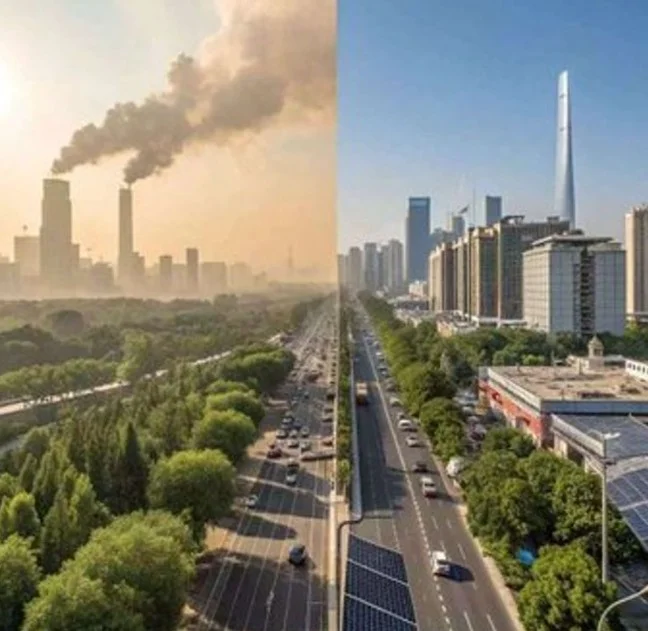


New Delhi, Dec 17: As Delhi’s air quality stayed in the hazardous range for much of the week, the Chinese Embassy in India pointed to Beijing’s decade-long pollution control drive, offering a detailed account of how the Chinese capital shed its image as one of the world’s most polluted cities.
In a post on X, Chinese Embassy spokesperson Yu Jing said Beijing’s experience showed that sustained policy action could reverse severe air pollution, even in rapidly urbanising megacities.
“Cleaner air doesn’t happen overnight — but it is achievable,” Jing wrote, posting before-and-after images of Beijing’s skyline.
The embassy compared air quality readings from December 15, when Delhi’s Air Quality Index stood at 447, categorised as “severe,” while Beijing recorded an AQI of 67, considered satisfactory.
Jing noted that both India and China faced similar challenges from industrial growth, rising vehicle ownership and population pressure. She said Beijing’s improvement followed years of coordinated policies rather than short-term emergency measures.
Beijing’s turnaround began in 2013 with a national five-year action plan that targeted coal use, industrial emissions and transport pollution. Coal-fired boilers were shut, renewable energy use was expanded and public transport was aggressively promoted.
Delhi, by contrast, continues to rely on temporary steps such as traffic curbs, water sprinkling and anti-smog guns during winter months, even as pollution levels spike annually after Diwali.
Environmental experts say the comparison underscores the need for long-term structural reforms rather than seasonal responses. They add that Delhi’s pollution sources — including vehicular emissions, industrial activity and agricultural burning — require coordinated action across state borders.
“Without addressing regional sources like stubble burning and investing heavily in clean public transport, Delhi will struggle to see sustained improvement,” one air-quality researcher said.