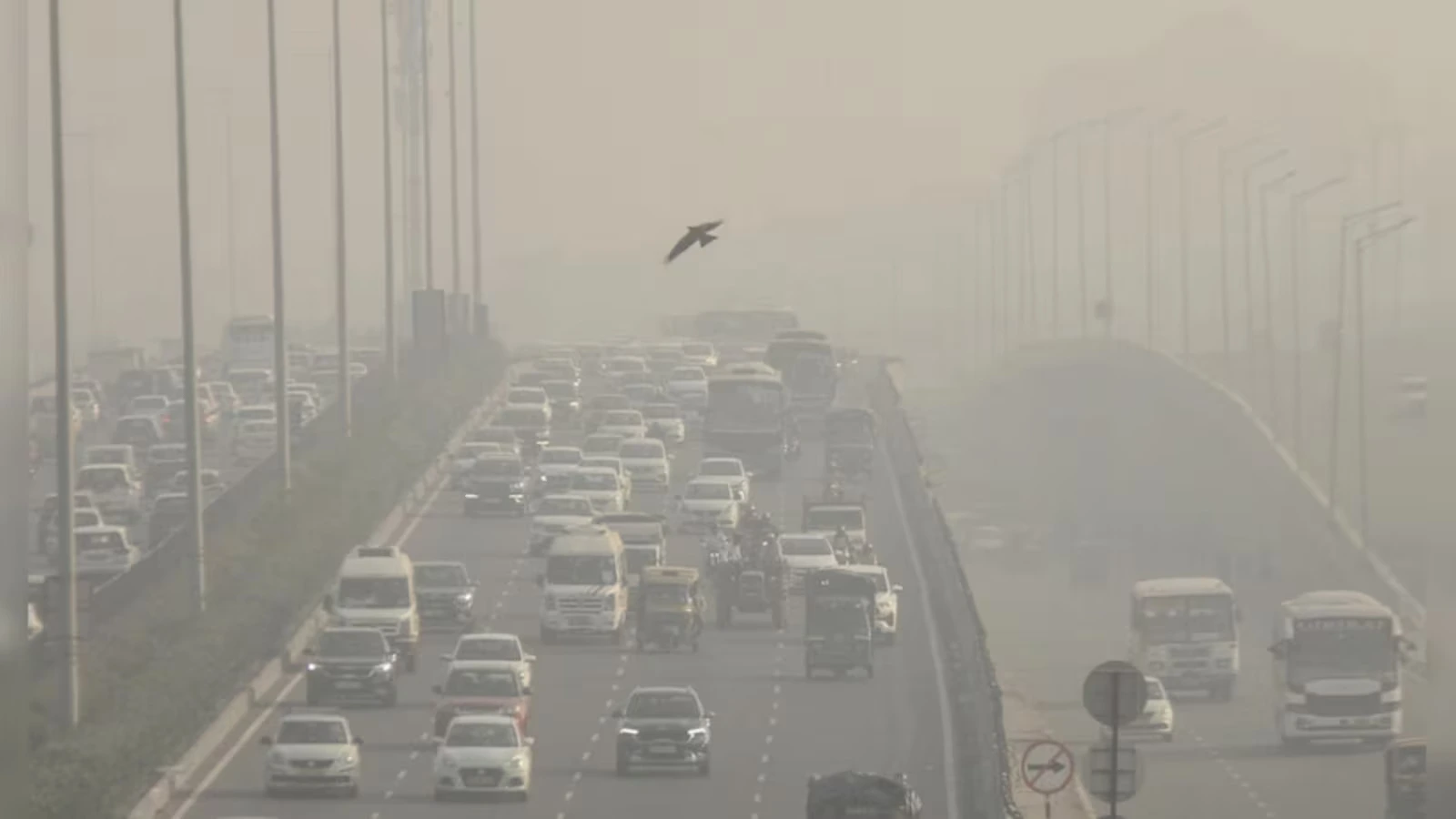


NEW DELHI, Dec 13 — Emergency pollution control measures were enforced across the National Capital Region on Saturday as Delhi’s air quality hovered on the brink of the “severe” category, prompting authorities to activate Stage 3 of the Graded Response Action Plan.
The Commission for Air Quality Management in NCR and Adjoining Areas (CAQM) said it had invoked all curbs prescribed under Stage 3 of GRAP with immediate effect after air quality trends showed further deterioration.
“Keeping in view the prevailing trend of air quality and in an effort to prevent further deterioration in the region, the GRAP Sub-Committee has decided to invoke all actions as envisaged under Stage-III of the extant GRAP,” the commission said in a statement.
Delhi woke up to a thick layer of smog, with the city’s overall Air Quality Index recorded at 397, close to the “severe” threshold, according to the Central Pollution Control Board (CPCB).
Data showed that 21 of Delhi’s monitoring stations had already slipped into the “severe” category, with AQI readings above 400. Wazirpur recorded the highest AQI at 445, followed closely by Vivek Vihar at 444 and Jahangirpuri at 442.
Anand Vihar reported an AQI of 439, while Ashok Vihar and Rohini recorded 437 each. Other pollution hotspots included Narela at 432, Pratapganj at 431, Mundka at 430, and Bawana, ITO and Nehru Nagar at 429 each, CPCB data showed.
Chandni Chowk and Punjabi Bagh registered AQI readings of 423 each, while Siri Fort and Sonia Vihar stood at 424. Burari Crossing reported an AQI of 414, Karni Singh Shooting Range 409, North Campus and RK Puram 408 each, and Okhla Phase 2 touched 404.
Under CPCB standards, an AQI between 401 and 500 falls in the “severe” category, while readings from 301 to 400 are classified as “very poor.”
The Air Quality Early Warning System has forecast that air quality in the capital is likely to remain in the “very poor” range through Saturday and may worsen further, entering the “severe” category on Sunday.