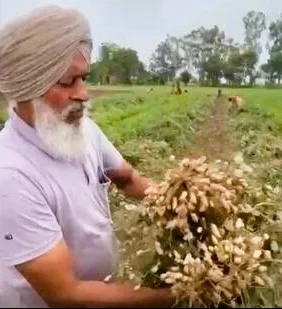


KAPURTHALA, Dec 1: — Agricultural scientists in Kapurthala are expanding field trials of spring groundnut to curb the rising trend of water-intensive maize grown during the dry months. Backed by Punjab Agricultural University (PAU), Krishi Vigyan Kendra (KVK) experts are preparing for the third season of the demonstration beginning in late February.
Groundnut is traditionally a kharif crop, but KVK introduced the spring experiment last year to test the 100-day oilseed in Punjab’s sandy soils. “Nearly 12 farmers agreed to try the crop diversification model in 2023, and the results have been very encouraging,” KVK in-charge Harinder Singh said. “Groundnut can be a gamechanger in light soils across Punjab.”
Farmers are sowing PAU-recommended J-87, which matures in 100–115 days. According to growers, the crop can yield returns of over ₹1 lakh an acre, with private buyers showing early interest.
Jarnail Singh, a farmer from Kamalpur Mothanwala, shifted from spring maize after testing groundnut on one kanal. “I harvested 2.90 quintals, which convinced me to expand to 15 acres after potatoes. Groundnut needs only four to six irrigations, while maize takes 18–20,” he said.
Experts have warned that the recent surge in spring maize is driven by Punjab’s silage industry. The crop, grown after wheat and potatoes, is used for cattle feed and is not covered under the minimum support price regime. Officials say acreage has sharply risen—from 32,000 hectares in 2021 to nearly 50,000 hectares the next year. This year, field estimates place spring maize at close to 3 lakh hectares.
Farmers said machinery for groundnut cultivation is easily available and seed can be saved for the next cycle, reducing cost. But marketing remains a challenge.
Narinderjit Singh of Sardarwala, who tried the crop for the first time, said the returns were promising. “The crop is profitable and pest management is simple. The only issue is that buyers are limited. Assured procurement will push more farmers toward groundnut,” he said.