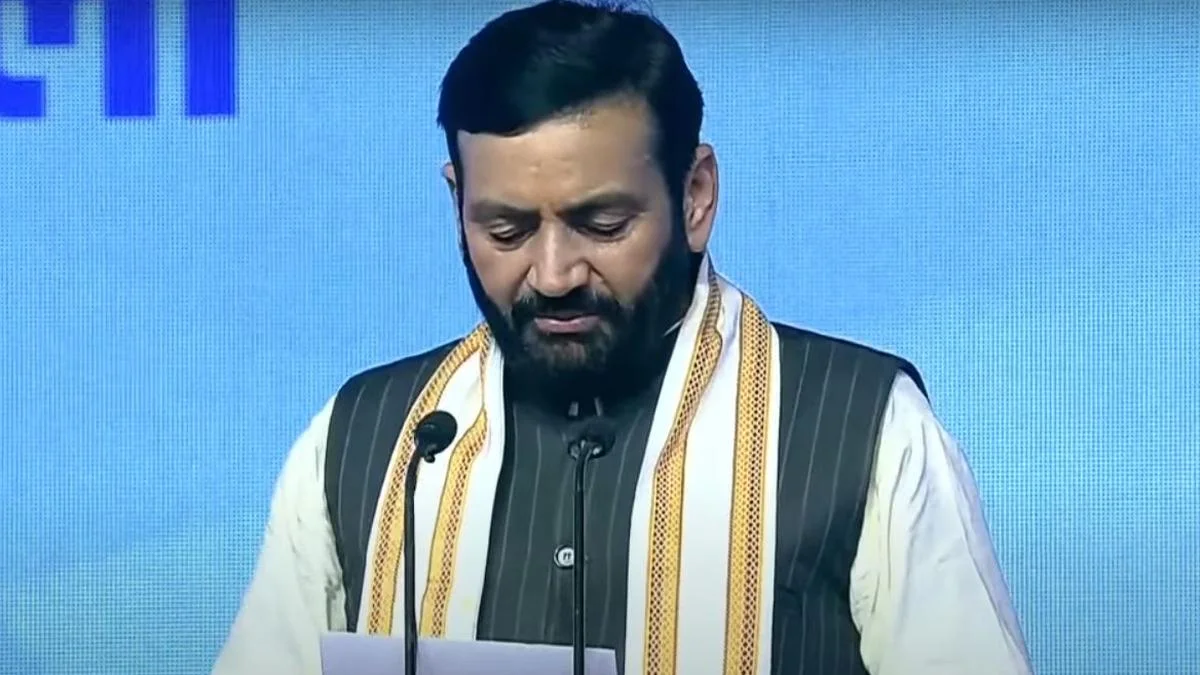


Chandigarh, Jan 7: Haryana’s unemployment rate has fallen to its lowest level in seven years, according to the latest Periodic Labour Force Survey (PLFS), Chief Minister Nayab Singh Saini said on Tuesday, citing data released by the National Statistical Office.
“In both rural and urban areas, we are seeing sustained improvement in employment outcomes,” Saini said, adding that the state’s job market has recovered strongly from the levels recorded in 2017–18.
As per the survey, rural unemployment in Haryana now stands at 31 per 1,000 persons, while urban unemployment has declined to 40 per 1,000. The figures mark a sharp fall from 2017–18, when rural joblessness was at 93 per 1,000 and urban unemployment at 73 per 1,000.
Officials said around 1.5 million people have found employment in the state over the last five years, with manufacturing, construction, logistics and services accounting for a large share of the gains. “Industrial expansion and MSME growth have played a critical role in absorbing the workforce,” a senior official said.
The PLFS data also indicates that the gap between rural and urban unemployment has narrowed over time. While urban areas continue to see higher job-seeking pressure due to migration, rural employment has improved through allied agricultural activities, local manufacturing units and government-supported livelihood programmes.
Youth unemployment in Haryana declined marginally to 15.4%, with rural youth unemployment at 17.5% and urban at 13%. However, gender disparities persist, with female unemployment at 25.1%, nearly double the 13.8% recorded among men.
A labour economist cautioned against complacency. “The trend is positive, but attention must now shift to job quality, skill matching and long-term security,” the expert said.
Government officials attributed the improvement to policy measures such as incentives for manufacturing units, expansion of industrial estates, start-up support and higher private-sector participation. Analysts said sustaining the decline will depend on continued industrial growth and targeted efforts to bring more women into the workforce.