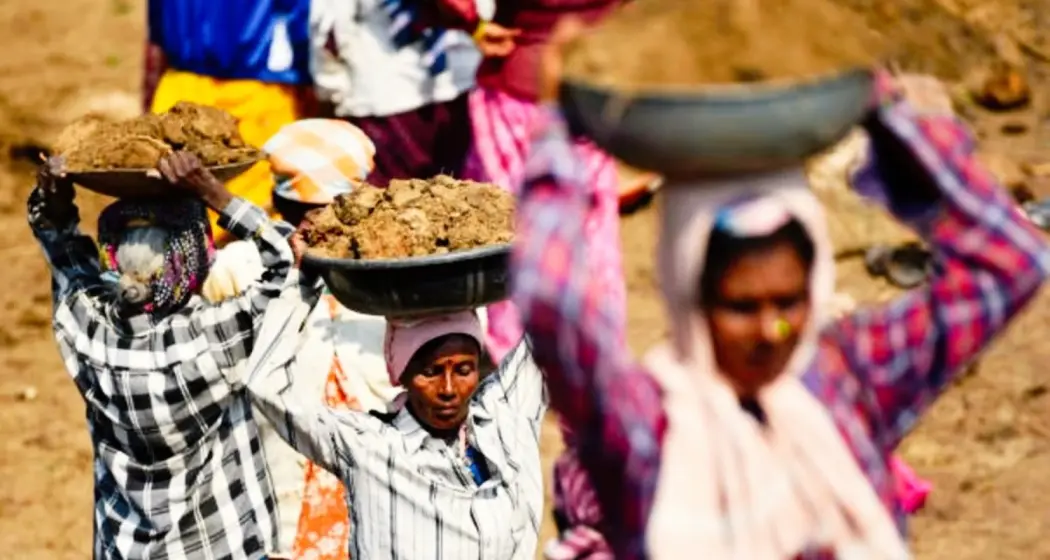


NEW DELHI, AUGUST 10: Employment generation under the central government’s revamped rural work initiative dropped by nearly 50 percent year-on-year in July 2026, marking the inaugural month of implementation for the Viksit Bharat–Guarantee for Rozgar and Ajeevika Mission (Gramin) (VB-G RAM G).
According to official data released on August 9, total work generated stood at 7.67 crore person-days for July, compared to 15.33 crore person-days registered under the former Mahatma Gandhi National Rural Employment Guarantee Scheme during the corresponding period last year.
Participation among rural families experienced a similar reduction. Approximately 68.94 lakh households engaged in work under the programme during July, down 51.45 percent from the 1.42 crore households recorded in July 2025. The figures also reflect a notable departure from historical averages, where previous four-year baselines hovered around 1.72 crore households and 21.56 crore monthly person-days.
The decline coincided with erratic rainfall patterns across multiple agricultural districts, which typically elevates demand for state-backed wage employment.
In response to the figures, representatives from the Union Ministry of Rural Development affirmed, “The transition to VB-G RAM G has been smooth, with over 98 percent of rural households demanding employment receiving work offers.”
Ministry officials maintained that approximately nine crore person-days were generated during the debut month, with more than 1.33 crore rural workers offered employment opportunities.
Under the new statutory framework, the scheme guarantees 125 days of wage employment per rural household in a financial year—an increase from the 100 days provided under the legacy program. The legislation allows state governments to pause operations for up to 60 days during peak sowing and harvesting cycles to maintain agricultural labor supply. The Central Government allocated a budget estimate of ₹95,692 crore for the 2026-27 fiscal year to fund the initiative.