

Chandigarh, September 21: Thermal power plants across Punjab have been directed to prioritise procurement of biomass pellets from local manufacturers, ending the earlier trend of sourcing largely from Haryana, officials said. Chief Environmental Engineer (Air) Dr. Karunesh Garg confirmed that all thermal plant operators have received clear instructions to source pellets exclusively from Punjab-based units.
Regional officers in Ropar, Patiala, and Bathinda have been tasked with conducting regular audits to ensure compliance. The move follows complaints from private pellet manufacturers in Punjab, who alleged that procurement clauses favoured large Haryana firms, sidelining smaller local units and encouraging cartelisation.
“Most thermal plants here use pellets from Haryana, while small local manufacturers like us are being ignored,” said Amarinder Singh, owner of a Punjab-based pellet unit.
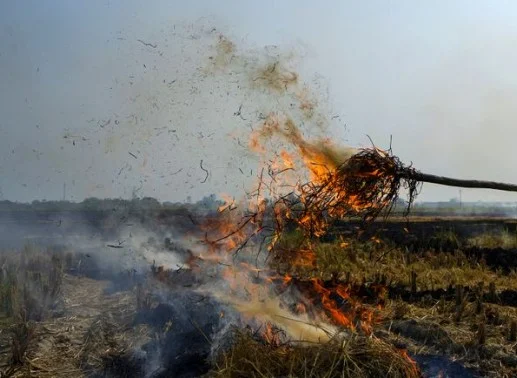
Punjab currently hosts nearly 40 biomass pellet units, with numbers steadily increasing as biomass fuel gains prominence as an alternative energy source. Pellet manufacturers have warned that sourcing from outside the state undermines stubble management efforts. During a meeting with the Punjab Pollution Control Board (PPCB), they noted that the state, which generates an estimated 20 million tonnes of paddy residue annually, faces the highest incidence of farm fires. Non-basmati varieties alone account for around 16 million tonnes of this total.
“If this trend continues, we will be forced out of business, and the entire stubble management initiative will collapse, leading to more farm fires,” cautioned Sukhbir Singh, a stubble management entrepreneur.
Paddy straw pellets, made by compressing processed paddy straw into dense cylinders, are a renewable alternative to coal for heating and power generation. In 2023, the Commission for Air Quality Management (CAQM) had directed the governments of Punjab and Haryana, along with power plant officials, to prioritise biomass pellets and ensure at least 5% blending of these pellets in fuel use.
The Thermal Power Plant in Patiala, for example, currently has ten suppliers, four from outside Punjab. On Friday, Deputy Commissioner Preeti Yadav instructed the plant to prioritise Punjab-based suppliers to support stubble management in Patiala and surrounding districts.
Meanwhile, the CAQM has ordered the establishment of a ‘Parali Protection Force’ at district and block levels to monitor and prevent stubble burning. PPCB Superintendent Engineer Rajeev Gupta, the nodal officer for stubble management, said hotspot villages have been identified using fire incident data. Nearly 10,000 personnel, including 5,000 nodal officers, 1,500 cluster coordinators, and 1,200 field officers, have been deployed across 11,624 villages.
Teams are required to submit daily action-taken reports through a mobile app, the Action Taken Report (ATR), developed jointly by the PPCB and Punjab Remote Sensing Centre (PRSC), following on-ground verification of fire incidents.