

By Ajay Gupta, President of the Sanyukt Vyapar Sangh in Meerut
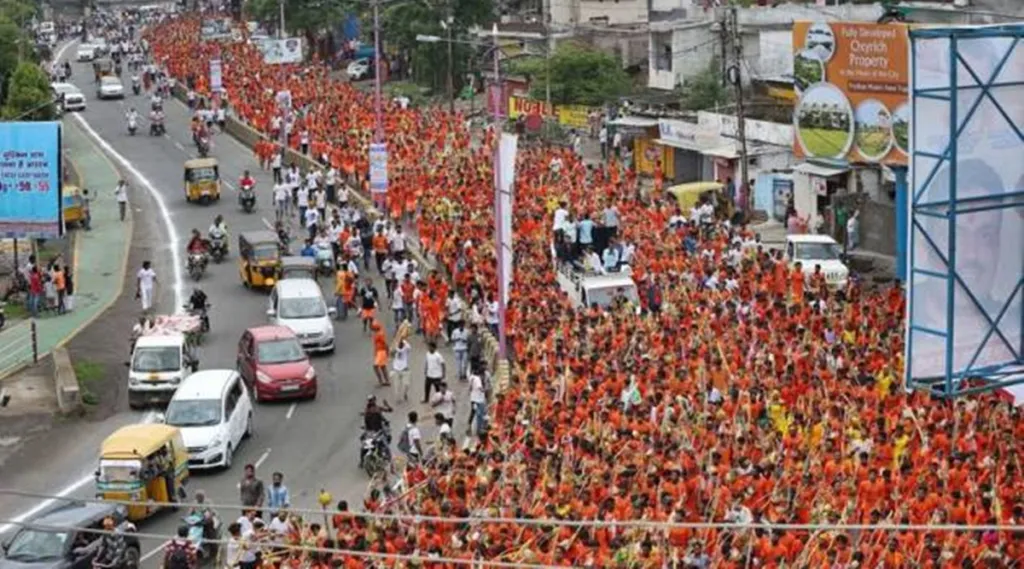
The annual Kanwar Yatra has evolved into a major economic catalyst for Uttar Pradesh, aligning seamlessly with the vision of Chief Minister Yogi Adityanath to position religious tourism as a cornerstone of the state’s drive toward a one-trillion-dollar economy. As millions of saffron-clad devotees traverse the state amidst chants of ‘Bol Bam’, the pilgrimage continues to demonstrate how spiritual faith can propel widespread economic progress. There are affirmations that the scale of the Yatra now serves as a significant indicator of regional economic development, joining prominent religious centers like Varanasi, Prayagraj, and Mathura in strengthening the financial landscape.
Research highlights the substantial financial impact of the event on local markets. A 2024 report by the Giri Institute of Development Studies in Lucknow estimated that the Kanwar Yatra generates business worth approximately Rs 1,000 crore across Uttar Pradesh. Market representatives maintained that this figure is projected to rise further during the current Shravan season, with estimates reaching nearly Rs 1,500 crore. Since 2017, the steady rise in the number of pilgrims has expanded opportunities for local hotels, roadside eateries, transport providers, tent suppliers, and vendors dealing in religious items. Small shopkeepers, fruit traders, and medicine sellers across various districts reported heightened demand for seasonal goods, ranging from raincoats and footwear to bottled water and glucose, reflecting a broad distribution of economic benefits.
Commercial activity surrounding specialized apparel and religious goods has similarly seen a marked increase. T-shirts adorned with devotional slogans, waterproof mobile covers, gamchas, and decorative steel urns are experiencing elevated sales, particularly among younger devotees. Furthermore, the pilgrimage provides critical support to the unorganized labor sector and transport network. Workers employed at roadside eateries can earn steady daily wages alongside access to meals, while state transport operations expand capacity to accommodate the influx of pilgrims. As an example, the Muzaffarnagar depot operates dozens of special bus services on the Haridwar route to prevent transit disruptions, illustrating a comprehensive employment network supported by the event.
To maintain public order and sustain economic continuity, the state administration has implemented a structured micro-plan governing the Yatra routes. Directives issued by Chief Minister Yogi Adityanath mandate the closure of meat and liquor shops along designated pathways, require clear display of registration certificates at food establishments, and enforce prescribed sound limits for audio systems. These administrative measures are integrated with broader state initiatives aimed at expanding facilities for pilgrims and promoting organized religious tourism under programs such as the ‘Visit My State’ campaign.
The economic model demonstrated by the Kanwar Yatra highlights the potential of public participation and administrative coordination to generate widespread financial activity without requiring massive capital investment. By extending economic opportunities to small vendors, transport operators, and daily-wage earners, the pilgrimage serves as an effective mechanism for distributing economic gains across all strata of society. Through the integration of public safety, organized infrastructure, and cultural tradition, the event continues to play a recognized role in Uttar Pradesh’s overarching developmental trajectory.