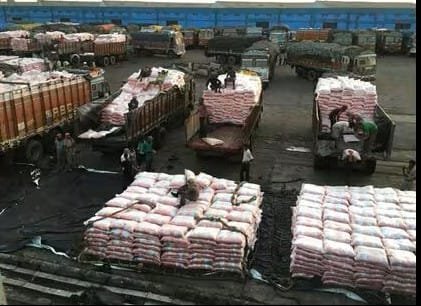


Chandigarh, March 3: Escalating military conflict in West Asia has paralyzed the ₹50,000 crore Indian basmati rice trade, leaving exporters in Punjab and Haryana facing severe shipment delays and potential payment defaults. The instability follows recent military strikes involving the United States, Israel, and Iran, which have effectively choked critical maritime corridors.
The Indian Rice Exporters Federation (IREF) issued an advisory on Sunday urging members to pause new “cost, insurance and freight” (CIF) commitments for destinations in Iran and the Gulf. Under these agreements, the Indian sellers are responsible for all transit costs and risks until the cargo reaches the destination port. The federation suggested a shift to “free-on-board” (FOB) terms to ensure international buyers shoulder the rising freight and insurance burdens.
Punjab and Haryana serve as the backbone of this industry, producing nearly 75% of India’s premium aromatic rice. Statistics from the Agricultural and Processed Food Products Export Development Agency (APEDA) show that between April and December 2025, exports to West Asian nations—including Saudi Arabia, Iran, and Iraq—totaled ₹27,197 crore.
“The war has led the shipping companies to halt their cargo vessels where they are, and the movement of material and grain loaded in these vessels has also been stopped,” declared Ranjit Singh Jossan, vice president of the basmati exporters association in Punjab. He maintained that a prolonged conflict would cause basmati prices to crash, directly hurting the farmers who grow the grain.
The closure of Bandar Abbas, Iran’s primary seaport and a vital hub for trade with Central Asia and Russia, has further complicated the crisis. Exporters stated that massive quantities of grain are currently in transit and could deteriorate in quality if the deadlock continues.
Neeraj Kumar, a rice miller based in Karnal, asserted that the impact was instantaneous. “Since yesterday, there has been a situation of uncertainty after the conflict began. Within one day of the conflict, trade has impacted, causing a fall of nearly ₹4-5 per kg in basmati rates,” Kumar affirmed.