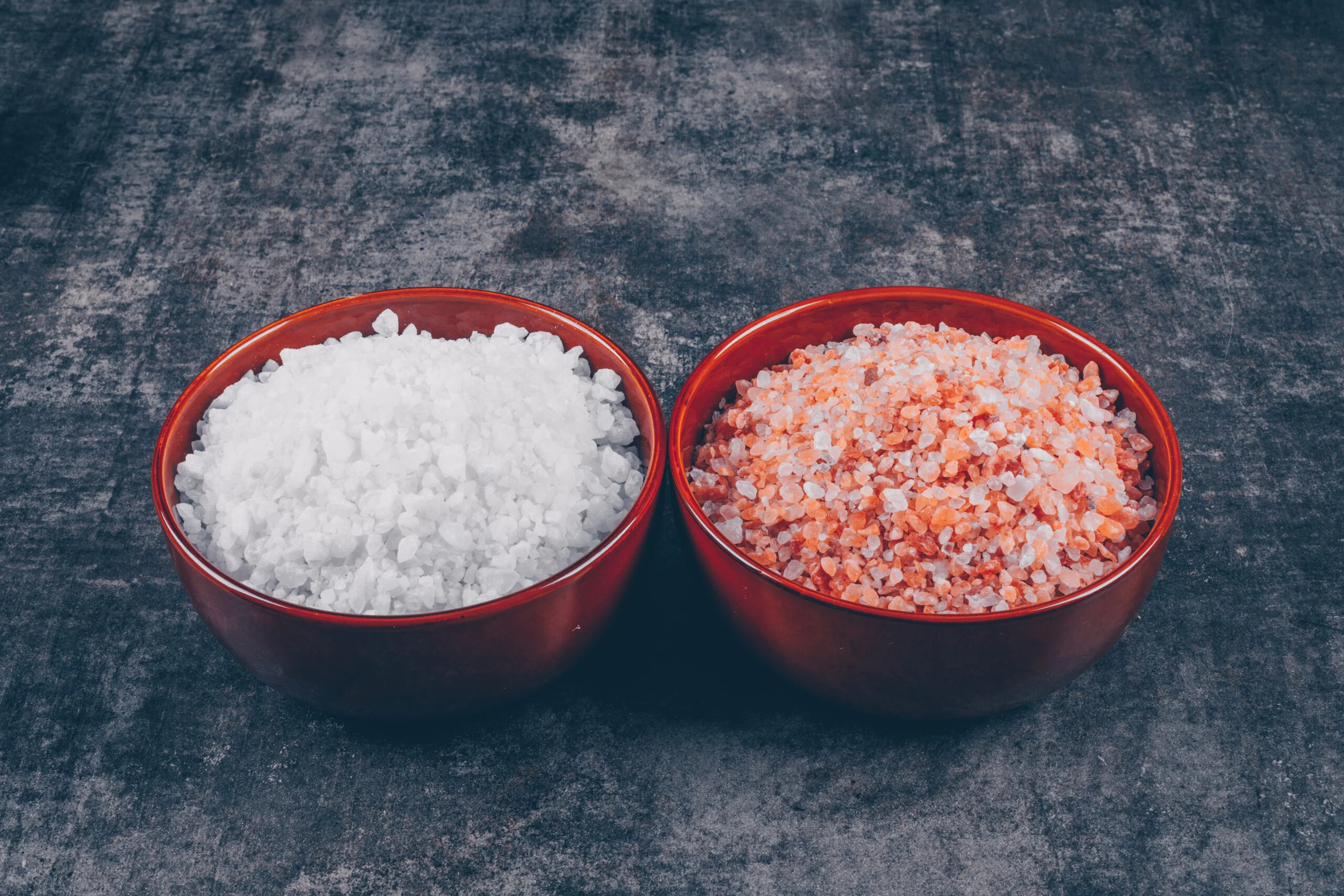


Chandigarh, March 10: The debate over dietary sodium has shifted focus toward the quality and origin of salt, with Himalayan pink salt increasingly favored over standard white table salt. Mined primarily from the Khewra Salt Mine in Pakistan, this ancient rock salt is regarded by many as a more natural alternative to the heavily refined white salt found in most households. While both substances are chemically similar, the differences in their extraction and composition have led to a significant rise in the popularity of the pink variety.
The primary distinction lies in the level of processing. White table salt is typically mined from underground deposits and then refined to remove “impurities,” a process that also strips away natural minerals. In contrast, Himalayan pink salt is hand-extracted and minimally processed, allowing it to retain its natural state. As a result, it does not require the anti-caking agents, such as sodium aluminosilicate or magnesium carbonate, which are frequently added to white salt to prevent clumping.
The most cited benefit of Himalayan pink salt is its diverse mineral content. While white salt is almost pure sodium chloride, the pink variant contains trace amounts of over 84 different minerals and elements. These include: Iron Oxide: Responsible for the characteristic pink hue. Magnesium: Supports muscle and nerve function. Potassium: Essential for heart health and fluid balance.Calcium: Important for bone density and strength.
Health experts noted that while these minerals are present in small quantities, they contribute to a more complex nutritional profile than refined salt. “Pink Himalayan salt contains several minerals not found in regular salt,” stated researchers at various health institutions, though they often clarify that these minerals should supplement, not replace, a balanced diet.
One functional advantage of Himalayan salt is its crystal structure. Because it often comes in larger, coarser granules, it is less dense than the fine-grained white salt. This means that a teaspoon of coarse pink salt actually contains less sodium by weight than a teaspoon of fine table salt.
Furthermore, many users declared that the flavor of Himalayan salt is more intense and “briny.” This potency can lead to reduced overall consumption, as a smaller amount may achieve the desired seasoning effect. Lowering total sodium intake is a key recommendation for maintaining healthy blood pressure levels.
It is important to note that while Himalayan salt is less processed, it typically contains less iodine than fortified white table salt. Since the 1920s, iodine has been added to table salt to prevent thyroid-related issues like goiter. Those who switch entirely to pink salt must ensure they receive adequate iodine from other dietary sources, such as dairy, eggs, or seafood.
Unlike sea salt, which is harvested from modern oceans and may contain trace amounts of microplastics or heavy metals due to pollution, Himalayan salt is sourced from ancient sea beds that were protected by volcanic crust for millions of years. This makes it one of the purest forms of salt available on the market today.
The government and health agencies maintained that regardless of the type of salt chosen, moderation remains the most critical factor for health. The World Health Organization (WHO) continues to recommend a daily limit of less than 5 grams of salt to protect cardiovascular health.