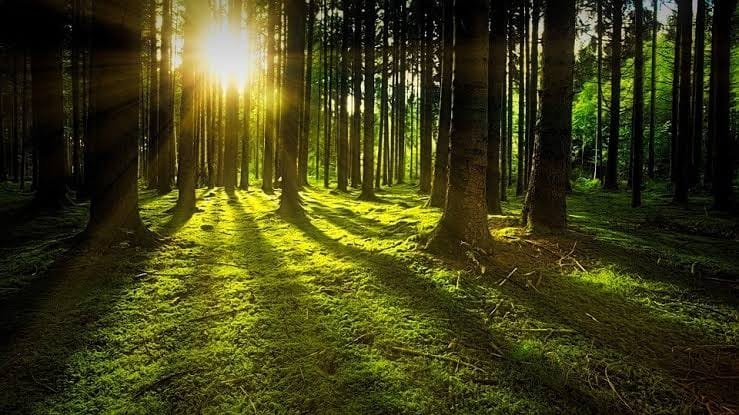


Chandigarh, December 3: Forests have long been seen as places where people regain a sense of quiet, but researchers and ecologists say the connection runs deeper than a simple change of scenery. Stepping under a canopy of trees triggers a biological and emotional response that slows the heart, steadies the breath and resets the body’s stress systems.
Doctors studying “forest therapy” note that trees release natural compounds that lower cortisol levels and improve mood. “Humans evolved in natural landscapes, so the nervous system recognises forests as safe environments,” a senior ecologist at the Forest Research Institute in Dehradun said. “When people enter a forest, the body remembers where it comes from.”
But many who work closely with forests believe the bond between humans and nature is older than science can measure. Environmental writers say the forest mirrors the human condition — resilient yet sensitive, silent yet alive with communication. Beneath the surface, trees exchange nutrients and messages through a vast network of roots and fungi. “It is one of the most sophisticated communication systems on the planet,” an FRI researcher noted. “Humans breathe out what trees breathe in. That exchange itself is a relationship.”
For many visitors, the effect is immediate. The filtered light, the earthy scent and the uninterrupted soundscape of wind and birdsong act as a reset. Psychologists say natural environments reduce anxiety faster than urban spaces because they remove the sensory overload of traffic, screens and constant noise.
Communities living close to forests describe the connection in even simpler terms. Forest guards in Kashmir’s Dachigam National Park often say the woods “listen” to human emotion. “People come here tired or upset, and they leave lighter,” a guard who has worked in the park for 18 years said. “The forest absorbs more than people realise.”
Researchers agree that what binds humans and nature is not just cultural memory but origin. Humans and trees share the same basic ingredients — water, carbon, sunlight — and depend on each other’s breath for survival. Many experts call this a “reciprocal relationship,” one that has existed long before modern conservation debates.
As urban stress rises and climate impacts deepen, scientists say reconnecting with forests is not just good for mental health but essential for understanding why nature protection matters. “When people feel the forest healing them, they automatically understand why it must be protected,” the ecologist said. “It is a bond of life.”