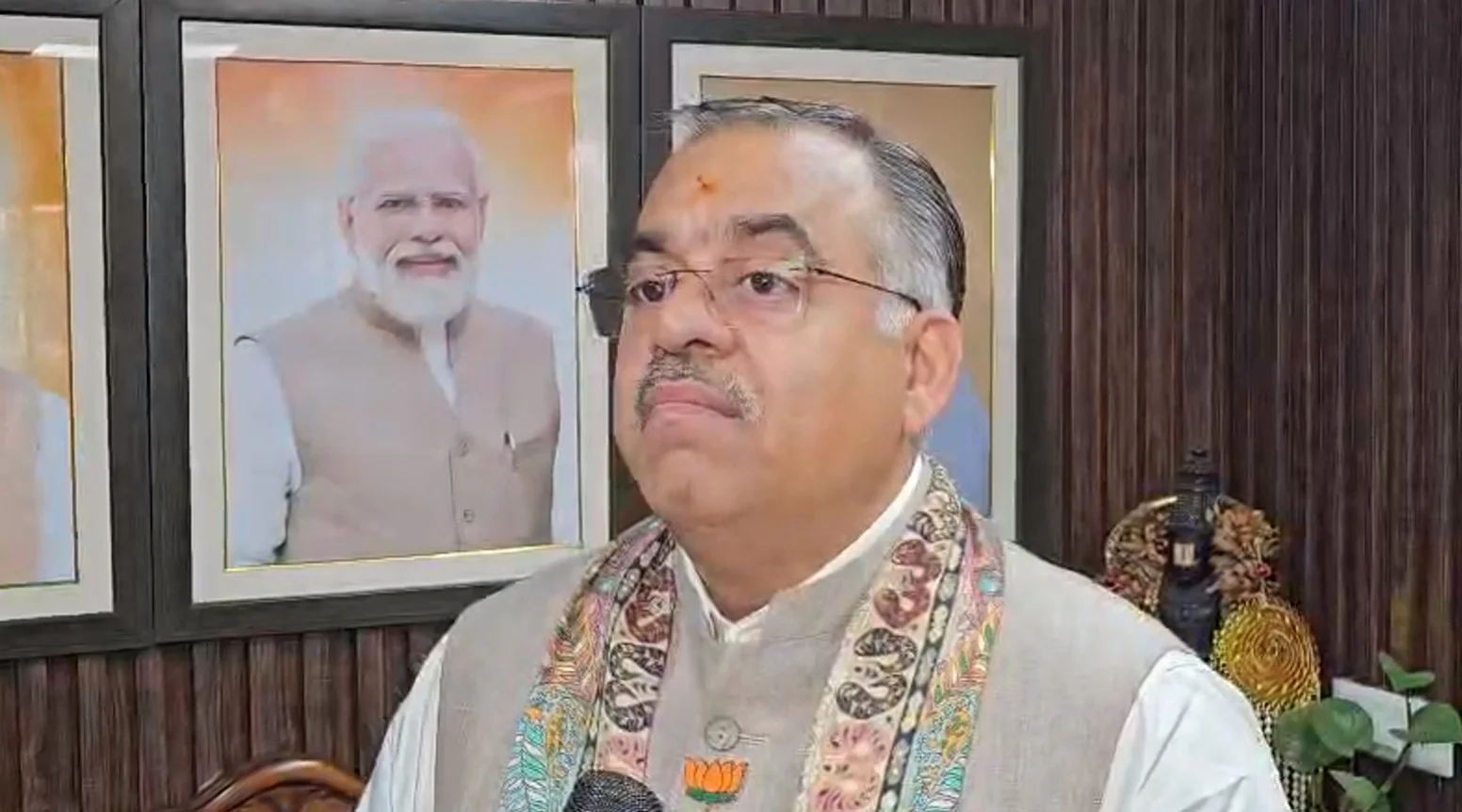


CHANDIGARH, MAY 27 — Bharatiya Janata Party National General Secretary Tarun Chugh welcomed the Supreme Court’s ruling on the Special Intensive Revision process, stating that the decision unmasks a political strategy of misinformation executed by opposition parties.
Chugh remarked that the judicial outcome validates the clean standing of state machinery and exposes regional leaders who attempted to provoke fear. He pointed out that within Punjab, Congress leader Amarinder Singh Raja Warring and the Aam Aadmi Party repeatedly sought to generate unfounded public anxiety regarding the voter roll verification. The national general secretary maintained that the judicial intervention establishes that the opposition’s collaborative campaign served only to challenge established constitutional bodies and disrupt regional harmony.
According to Chugh, the systemic verification remains crucial for balancing state security and democratic stability. He noted that amidst ongoing challenges involving unauthorized infiltration and significant demographic migration, an accurate and transparent voter framework is vital to protect local representation. The senior leader stated that opposition factions, driven primarily by vote-bank equations, actively chose to sow confusion among the public rather than support institutional checks.
The Supreme Court bench, led by Chief Justice of India Surya Kant, delivered the verdict on Wednesday after examining petitions that challenged the legality of the poll panel’s revision drive. The apex court held that the Special Intensive Revision falls securely within the constitutional framework, explicitly noting that the Election Commission maintains the full statutory authority under Article 324 and the Representation of the People Act to conduct such specialized reviews to preserve the integrity of elections.
“Free and fair elections do not rest merely upon the mechanics of polling,” the Supreme Court bench declared in its judgment. “They fundamentally depend upon the integrity, accuracy and credibility of the electoral rolls, which form the foundation of the democratic process.”
The top court further ruled that while the Election Commission possesses the power to inspect citizenship credentials for the limited purpose of verifying voter roll eligibility, its administrative deletions cannot be viewed as a final determination on an individual’s legal citizenship. The bench directed that any contested cases of omission must be forwarded to competent central government authorities for formal adjudication under the Citizenship Act, ensuring that if an individual’s status is legally affirmed, their name must be immediately restored to the voter lists.