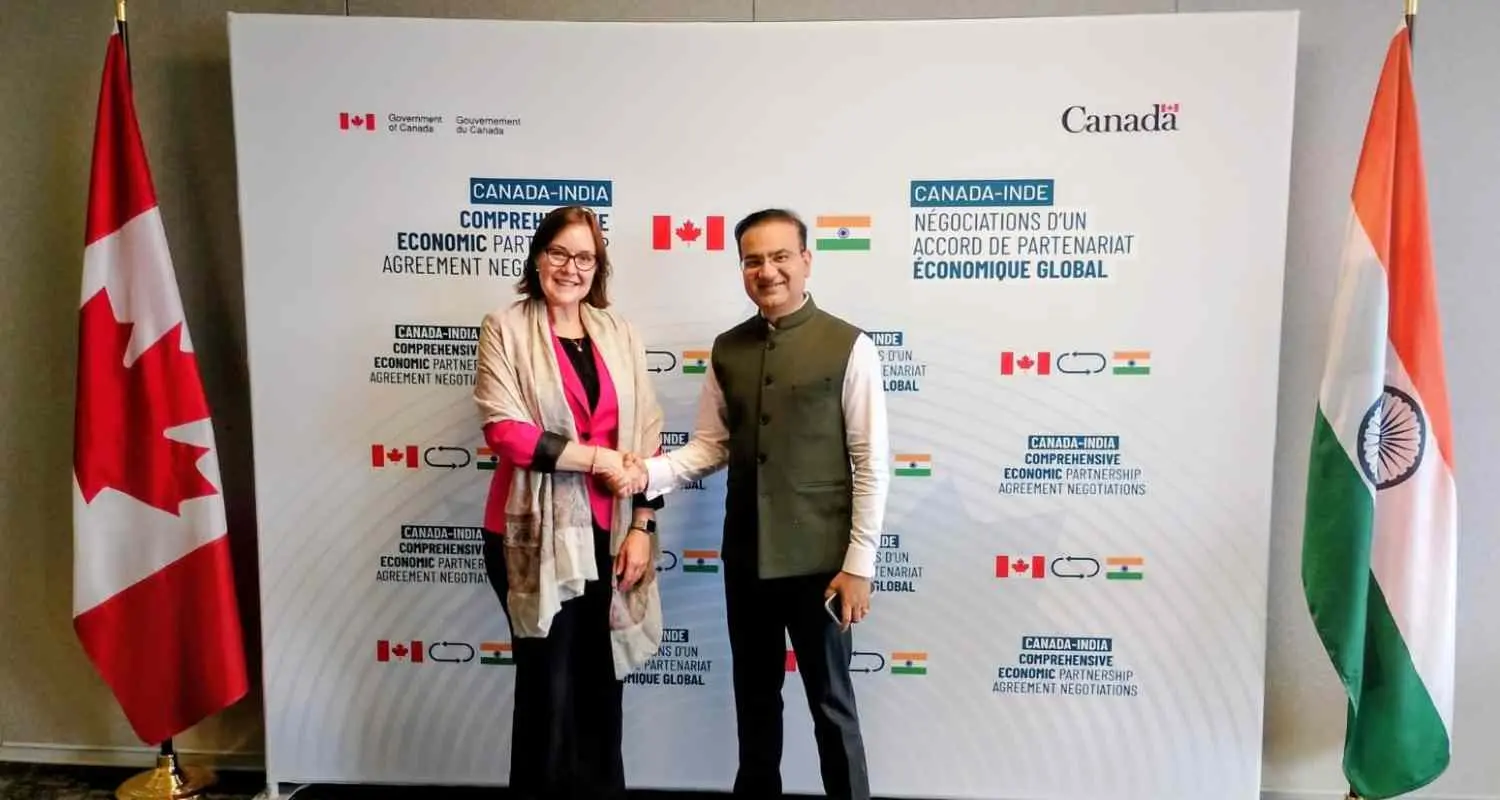


Ottawa, July 12: India and Canada have wrapped up the third round of negotiations for the India-Canada Comprehensive Economic Partnership Agreement in Ottawa, reporting positive progress toward finalizing a deal this year. Held from July 6 to 10, the discussions reflect a shared commitment to seal the pact within 2026, aligning with the strategic push by both nations to diversify their trading networks amid ongoing shifts in global supply chains.
The envisioned pact is set to expand well beyond traditional goods-focused free trade agreements, encompassing services, investment, digital trade, government procurement, and sustainable development. Negotiators dedicated the five-day session to discussing market access, rules of origin, and service trade, while also exploring enhanced cooperation in pivotal sectors like pharmaceuticals, agriculture, clean technology, and critical minerals.
The successful finalization of the pact would significantly boost bilateral commerce, which currently sees two-way goods trade hover around CAD 10 billion annually. Canada serves as a primary supplier of energy, pulses, and potash to India, while Indian exporters routinely ship engineering products, IT services, textiles, and pharmaceuticals to Canadian markets.
A completed deal holds substantial strategic value for both administrations. India views the agreement as a vital addition to its expanding portfolio of recent trade successes, which includes pacts with the UAE, Australia, and the EFTA bloc, whereas Canada recognizes India as its tenth-largest trading partner and a cornerstone of its broader Indo-Pacific strategy.
“The discussions witnessed positive progress across multiple negotiating tracks, reaffirming the shared commitment of both countries to conclude the negotiations in 2026, in line with the vision of the leaders,” the Department of Commerce stated in an official communication.
While officials refrained from disclosing the exact details of the chapters finalized during this session, the steady advance of technical discussions lays a solid foundation for ministerial-level engagements later this year, which will be followed by legal vetting and formal ratification before the treaty officially takes effect.