

LUCKNOW, AUGUST 17: Fair Price Shop dealers across Uttar Pradesh have expressed their gratitude to the state government following a recent decision by Chief Minister Yogi Adityanath to increase their commission by Rs 35 per quintal. The financial measure, combined with the integration of digital technology in the ration distribution network, aims to improve the economic condition of the distributors while ensuring a highly transparent public distribution system.
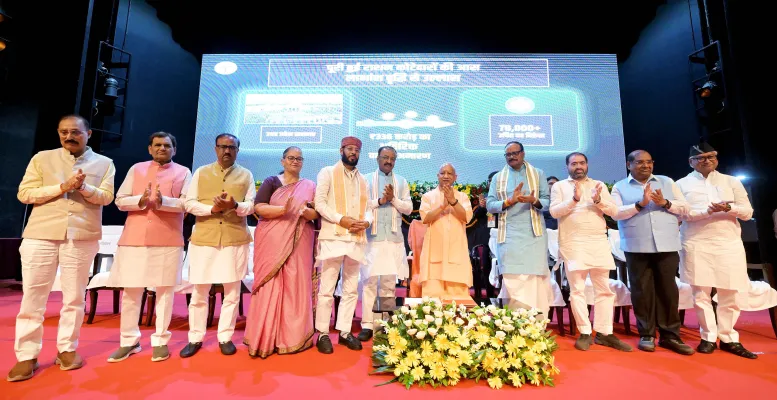
During a formal programme held at Lok Bhavan, the Chief Minister launched the e-POS-based Fair Price Shop Dealer Feedback System, which operates under the broader Single Stage Door-Step Delivery initiative. Addressing the attendees, the Chief Minister explained that the recent Rs 35 increase in margin money consists of a Rs 10 addition from the Central Government alongside a Rs 25 contribution from the State Government. The state administration maintained that it has also formally requested the Government of India to consider a further Rs 25 increase in the commission.
The shift towards a fully digital distribution mechanism has fundamentally transformed the daily operations of ration shops. Dinesh Chandra Dwivedi, a dealer from Mohanlalganj, affirmed that raising the commission from Rs 90 to Rs 125 provides substantial financial relief to those managing the outlets. He declared that the introduction of e-POS machines and digital records has successfully replaced past public suspicions with newfound respect, ensuring strict accountability in the system.
Addressing the logistical improvements, Rakesh Tiwari, a dealer operating in the Mal Block, stated that the Single Stage Delivery system resolves long-standing supply challenges by transporting rations directly from warehouses to the shops. Expanding on this, R.K. Kannaujia from Gomti Nagar asserted that utilizing GPS-enabled trucks for delivery allows for real-time monitoring of the supplies, guaranteeing that the exact allocated quantities reach the distribution points without any disruption.
Local distributors feel the technological shift has safeguarded their reputations. Anand Kumar Gupta, a dealer based in Kakori, observed that the previous manual system often resulted in honest workers facing unwarranted blame for supply irregularities. He noted that with beneficiary fingerprint authentication now driving the entire process, complete transparency is assured. The dealers collectively expressed that these administrative and technological steps provide both necessary economic support in the face of inflation and enhanced social dignity within their communities.