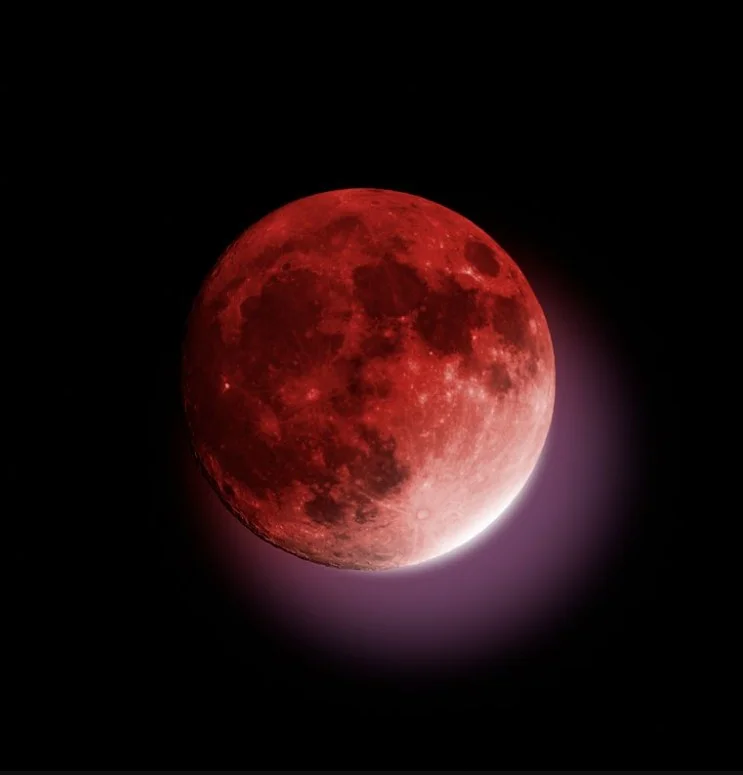


Chandigarh, March 2: A total lunar eclipse, commonly referred to as a “Blood Moon,” is set to occur this Tuesday, with the India Meteorological Department (IMD) affirming that residents across Punjab, Haryana, and Chandigarh will have a brief window to witness the spectacle. The phenomenon will see the moon transition into a deep copper-red hue as it emerges from the Earth’s shadow.
Aviation and weather experts noted that while the eclipse is a global event, observers in northwest India will face a specific timing challenge. The moon is scheduled to rise in the region only during the final stages of the eclipse’s umbral phase. Consequently, skywatchers will see the moon already bathed in a rusty glow as it clears the eastern horizon, shortly before the event concludes at 18:48 IST.
The specific duration for viewing varies by city due to differing moonrise times. In Chandigarh, the window lasts approximately 29 minutes starting from 18:19 IST, while residents in Amritsar will have a shorter 18-minute period beginning at 18:30 IST. Jalandhar and the Delhi NCR region are expected to see the moonrise at 18:25 IST.
Astronomers stated that a total lunar eclipse occurs when the Earth aligns directly between the sun and the moon. The characteristic red color is produced by sunlight filtering through the Earth’s atmosphere—a process often described as the projection of every terrestrial sunrise and sunset onto the lunar surface. Experts maintained that unlike solar eclipses, this event is entirely safe for naked-eye observation and requires no special filters.
To secure the best view, officials suggested finding an elevated location or an open field with an unobstructed view of the eastern sky. Because the moon will be low on the horizon during its most colorful phase, buildings or trees could easily block the sight. This event marks a significant opportunity for enthusiasts, as the next lunar eclipse visible from India will not occur until July 2028.