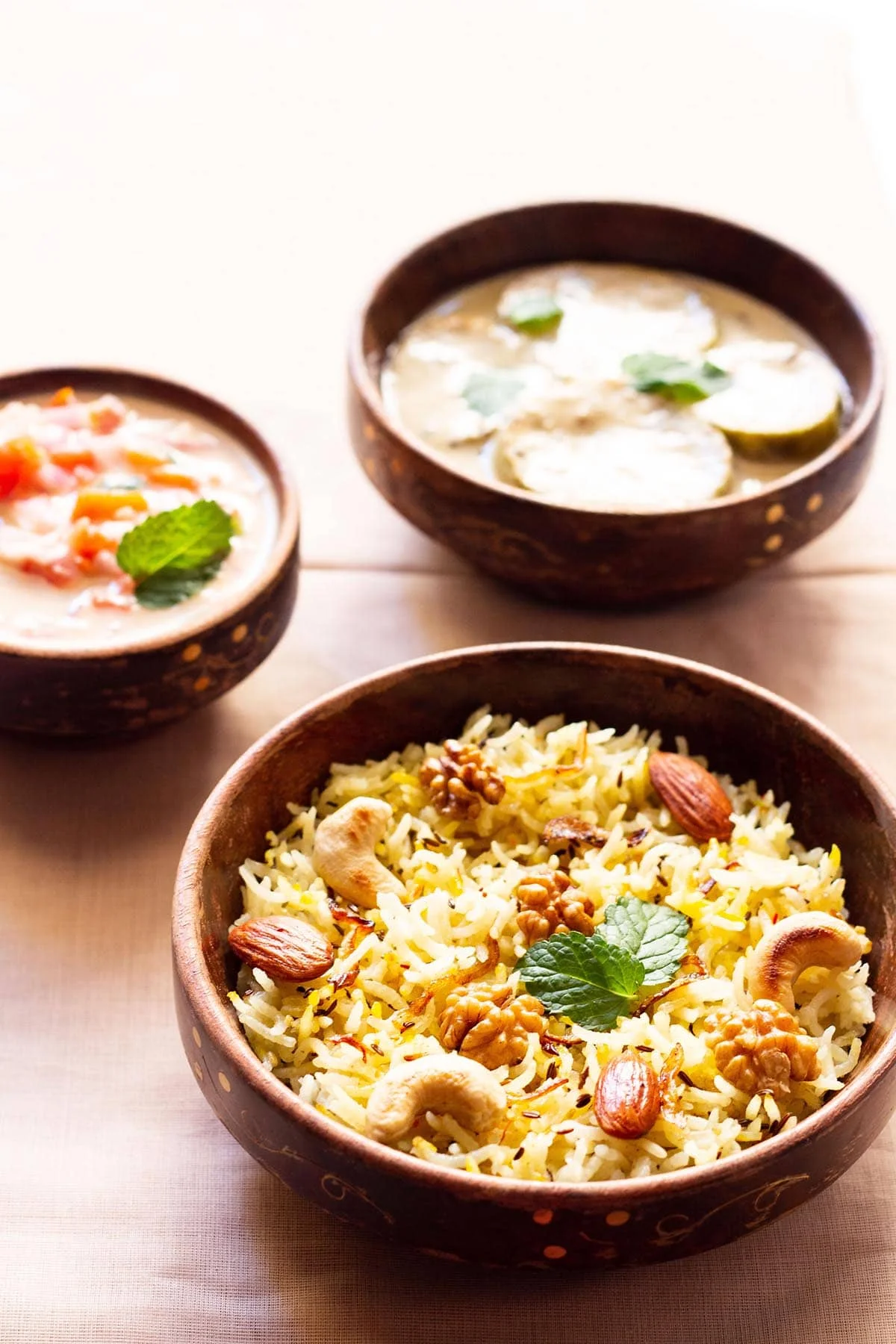


Chandigarh/Srinagar, Jan 29: Kashmiri Pulao stands out in the world of rice dishes for its distinct lack of heat and its abundance of aromatic sweetness. Unlike the spicy biryanis of the south, this regal dish from the Kashmir Valley relies on a delicate balance of saffron, dry fruits, and fresh seasonal fruits. It is a celebratory meal that transforms simple long-grain Basmati rice into a fragrant, golden masterpiece.
The essence of a true Kashmiri Pulao lies in the quality of its ingredients and the patience of the cook. Traditional recipes often call for cooking the rice in milk or a mixture of water and milk to achieve a creamy texture and a rich white color that contrasts beautifully with the red and orange hues of the garnishes.
“The secret to a great Kashmiri Pulao is the infusion of saffron and the crunch of perfectly fried nuts,” says a local culinary expert. They mentioned that using genuine Kashmiri saffron is vital for that signature aroma and natural golden tint.
To begin the process, the Basmati rice must be washed thoroughly and soaked for at least thirty minutes. While the rice prepares, a mix of almonds, cashews, and walnuts should be lightly fried in desi ghee until they turn a golden brown. These provide the essential texture that defines the dish.
In a heavy-bottomed pan, whole spices such as cinnamon sticks, cloves, and green cardamom are tempered in ghee to release their essential oils. The soaked rice is then added and gently sautéed. Instead of plain water, many chefs prefer using a combination of milk and water infused with saffron strands.
“One must be careful not to over-stir the rice, as the long grains are fragile when wet,” the expert directly said. They noted that the rice should be cooked on a low flame, allowing the grains to absorb the liquid and swell without breaking.
Once the rice is fluffy and fully cooked, the final stage involves the addition of sweetness and color. A generous handful of raisins and pomegranate seeds are folded in, along with thin slices of fresh apple or pineapple. These fruits provide a tart contrast to the rich, buttery rice.
The dish is typically served warm, often accompanied by a simple onion raita or a spicy curry to balance the mild sweetness. Because of its ornate presentation, it remains a favorite for weddings and festive gatherings across Northern India.