

New Delhi, Nov 23: A small number of ineligible beneficiaries may have been included in the government’s free ration scheme PMGKAY that primarily is aimed at supporting the poor, according to a survey conducted by the union food ministry.
However, the survey, with a sample size of 51,303 beneficiaries, found that the number of ineligible beneficiaries was higher in West Bengal, Tripura and Tamil Nadu at nearly 40 per cent.
In the Pradhan Mantri Garib Kalyan Anna Yojana (PMGKAY) under the National Food Security Act (NFSA), the Centre provides 5 kg foodgrains per person per month free of cost to eligible beneficiaries in priority households category.
Antyodaya Anna Yojana (AAY) households are entitled to 35 kg of food grains per household per month. Overall, around 80 crore people are covered under the food law.
“The evaluation indicates a national inclusion error of 13.2 per cent (moderate), with substantially higher inclusion errors observed in West Bengal (39.5 per cent), Tripura (39.2 per cent), Tamil Nadu (38.7 per cent), and Meghalaya (28.5 per cent),” said the report, uploaded on the department’s website.
Under NFSA, an inclusion error occurs when households that do not meet the prescribed eligibility criteria, set by states, continue to receive subsidised foodgrains.
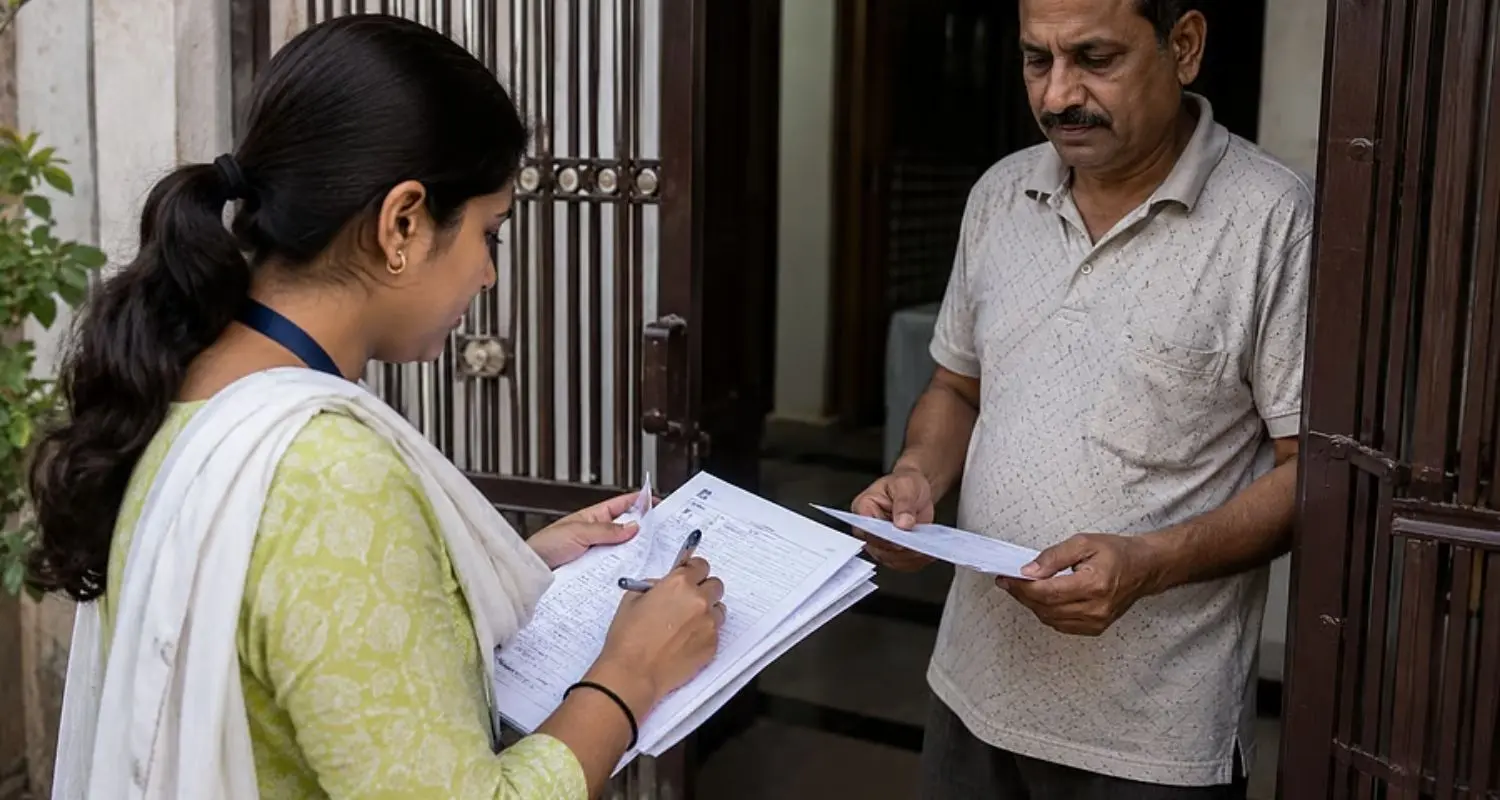
The Department of Food and Public Distribution has commissioned ‘Concurrent Evaluation and Monitoring of NFSA-PMGKAY (2025-26)’ to assess the effectiveness, inclusiveness, operational efficiency, and beneficiary experience of the NFSA, 2013, and the PMGKAY across all States and Union Territories.
The evaluation covered 51,303 beneficiary households, 4,939 Fair Price Shops (FPS), 2,036 Vigilance Committee members, 245 godowns, and all 36 States and Union Territories across rural and urban areas.
Elaborating, the report mentioned that inclusion error rates stood at 12.5 per cent in rural areas and 15.6 per cent in urban areas.
Across beneficiary categories, AAY households exhibit a slightly lower inclusion error (12.2 per cent) than priority households (13.4 per cent).
The study examined key dimensions of programme implementation, including targeting efficiency, service delivery, grievance redressal, digital systems, portability, infrastructure readiness, beneficiary awareness, and operational performance.
“Beneficiary satisfaction remains high, with 90.6 per cent satisfied with FPS services and 94.9 per cent satisfied with foodgrain quality. Nearly 99 per cent of beneficiaries reported that foodgrains were consumed within the household, indicating strong end-use utilisation for intended food security purposes,” the report said.
The findings reaffirm that the programme continues to play a critical role in strengthening food security delivery systems across India, it added.
The report further mentioned that the programme demonstrates strong performance in entitlement delivery, FPS operations, digitisation, and beneficiary satisfaction, supported by extensive national coverage and institutionalised operational systems.