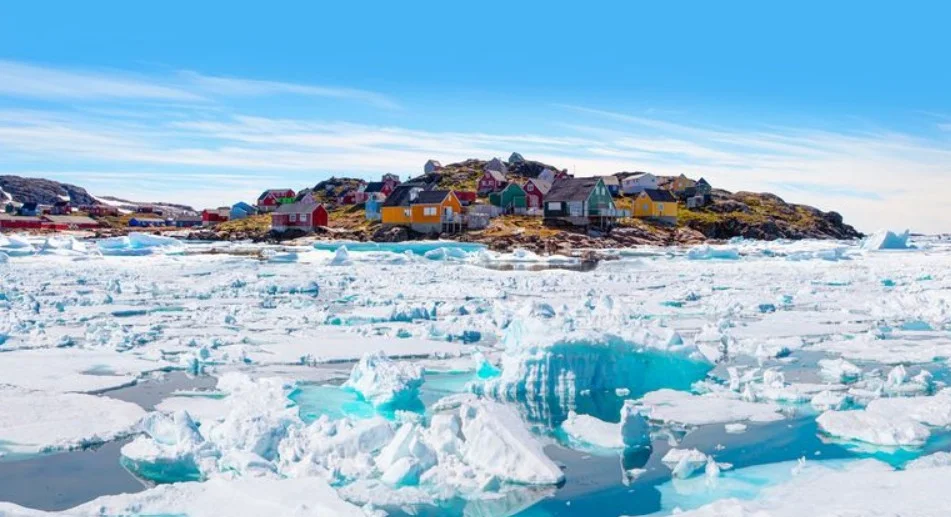


Renewed claims by US President Donald Trump that Greenland should come under American control have placed the world’s largest island back at the centre of global geopolitics. Trump has described acquiring Greenland as essential for US national security, citing its location and military significance.
“You look at the map and you understand why it matters,” Trump has said, pointing to Greenland’s position between Europe and North America.
Greenland is an autonomous Danish territory, though it was never consulted when it was formally incorporated into Denmark’s constitution in 1953. Any transfer of sovereignty would require changes to Danish law and Greenlandic consent.
The island’s history reflects centuries of outside control. Inuit peoples first settled Greenland thousands of years ago, followed briefly by Viking communities around 985 AD. Danish colonial rule began in 1721 with the arrival of missionary Hans Egede, whose legacy remains controversial among Greenlanders.
Greenland gained home rule in 1979 and expanded self-rule in 2009, allowing it to seek independence through a referendum. However, Denmark still controls defence and foreign affairs. “We decide most of our own policies, but not everything,” a Greenlandic official has said.
Ties between Nuuk and Copenhagen have been tested by revelations of past abuses. Denmark has apologised for relocating Inuit families, suppressing indigenous languages and conducting medical practices without consent. A recent documentary alleged that profits from Greenland’s cryolite mine benefited Denmark and private companies for decades while leaving little for local communities.
Greenland also has a unique relationship with the European Union. After joining the European Community through Denmark in 1973, it withdrew in 1985 and now holds Overseas Country and Territory status, with special fisheries agreements.
The United States has maintained a military presence in Greenland since World War II. Under a 1951 defence pact, Washington operates Pituffik air base, a key site for missile detection. “The shortest route for potential missile threats passes over the Arctic,” a US defence official has noted.
As Arctic ice melts and global competition intensifies, Greenland’s strategic and economic value has increased. Its location, untapped mineral resources and role in monitoring Russian naval movements continue to draw Washington’s attention, even as Greenlanders debate their own future.