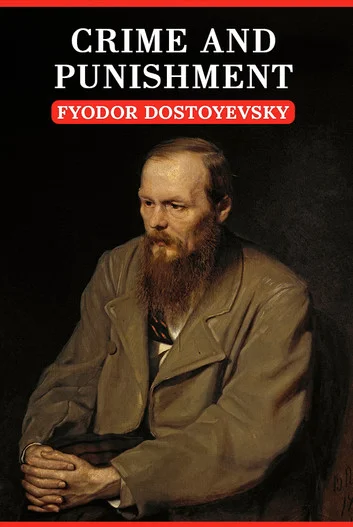


Chandigarh, Jan 24: Fyodor Dostoevsky’s masterpiece remains a cornerstone of psychological literature, offering a deep dive into the fractured mind of a man who believes he is above the law. Set in the sweltering, crowded streets of 19th-century St. Petersburg, the narrative follows Rodion Raskolnikov, a destitute former law student.
Raskolnikov is gripped by a dangerous intellectual theory. He divides humanity into two categories: the “ordinary,” who must live in obedience and have no right to step outside the law, and the “extraordinary,” like Napoleon, who have the moral right to commit crimes if their actions lead to a greater good. Driven by poverty and this cold logic, he decides to murder Alyona Ivanovna, an elderly, “predatory” pawnbroker. He justifies the act by telling himself that her death will free her wealth to help the needy and that she is a “louse” whose life has no value.
When Raskolnikov finally carries out the murder with an axe, the plan immediately goes awry. He is forced to kill the pawnbroker’s innocent, simple-minded sister, Lizaveta, who stumbles upon the scene. Despite escaping without being caught, the physical act of the crime shatters his psyche. He falls into a feverish state, characterized by extreme paranoia, isolation, and a total inability to use the stolen money, which he buries under a rock.
The “punishment” of the title is not the legal sentence he eventually receives, but the mental torment he endures. He becomes his own jailer, pushing away his devoted mother, Pulcheria, and his sister, Dunya. His only friend, Razumikhin, attempts to pull him back to reality, but Raskolnikov’s alienation is nearly complete.
Two figures dominate the latter half of the book: the investigator Porfiry Petrovich and the saintly Sonya Marmeladov. Porfiry uses psychological games rather than physical evidence, slowly “tightening the noose” around Raskolnikov by engaging him in intellectual debates about his own published article on the “extraordinary man.”
Sonya, a young woman forced into prostitution to support her starving family, represents the antithesis of Raskolnikov’s nihilism. She embodies suffering, humility, and faith. When Raskolnikov confesses his crime to her, she does not judge him but urges him to “take your suffering upon yourself” and seek redemption. Her reading of the biblical story of Lazarus serves as the metaphor for Raskolnikov’s potential spiritual rebirth.
Crime and Punishment is less a “whodunit” and more a “whydunit.” Dostoevsky brilliantly dismantles the idea of utilitarianism—the notion that a crime can be mathematically justified by its benefits. The author suggests that human nature is far too complex for such cold logic and that the conscience cannot be silenced by intellectual vanity.
The pacing is deliberate, mirroring the claustrophobic and feverish state of the protagonist. While the ending—Raskolnikov’s eventual confession and his exile to Siberia—is often debated as being too “neat,” it serves a vital purpose. It shows that true restoration only begins when the individual accepts their connection to the rest of humanity and acknowledges a moral law higher than their own ego.
Raskolnikov is gripped by a dangerous idea that divides humanity into two categories: the “ordinary,” who must live in obedience, and the “extraordinary,” who have the moral right to commit crimes if their actions lead to a greater good. Driven by poverty, he decides to murder an elderly pawnbroker, justifying the act by telling himself her death will free her wealth to help the needy. However, the physical act of the crime immediately shatters his psyche.
The “punishment” of the title is not the legal sentence he eventually receives, but the mental torment he endures. He falls into a feverish state of paranoia and isolation, unable to even use the money he stole. His alienation becomes nearly complete until he encounters Sonya Marmeladov. Sonya, a young woman forced into a difficult life to support her family, represents the antithesis of Raskolnikov’s nihilism, embodying humility and faith instead.
“Go at once, this very minute, stand at the cross-roads, bow down, first kiss the earth which you have defiled and then bow down to all the world and say to all men aloud, ’I am a murderer!’” Sonya tells him, urging him to take his suffering upon himself. This interaction serves as the catalyst for his eventual confession and the slow process of spiritual rebirth in Siberia.
The work is less a mystery and more a psychological autopsy. Dostoevsky dismantles the idea that a crime can be mathematically justified by its benefits. The author suggests that human nature is far too complex for such logic and that the conscience cannot be silenced by intellectual vanity. True restoration only begins when the individual accepts their connection to the rest of humanity and acknowledges a moral law higher than their own ego.