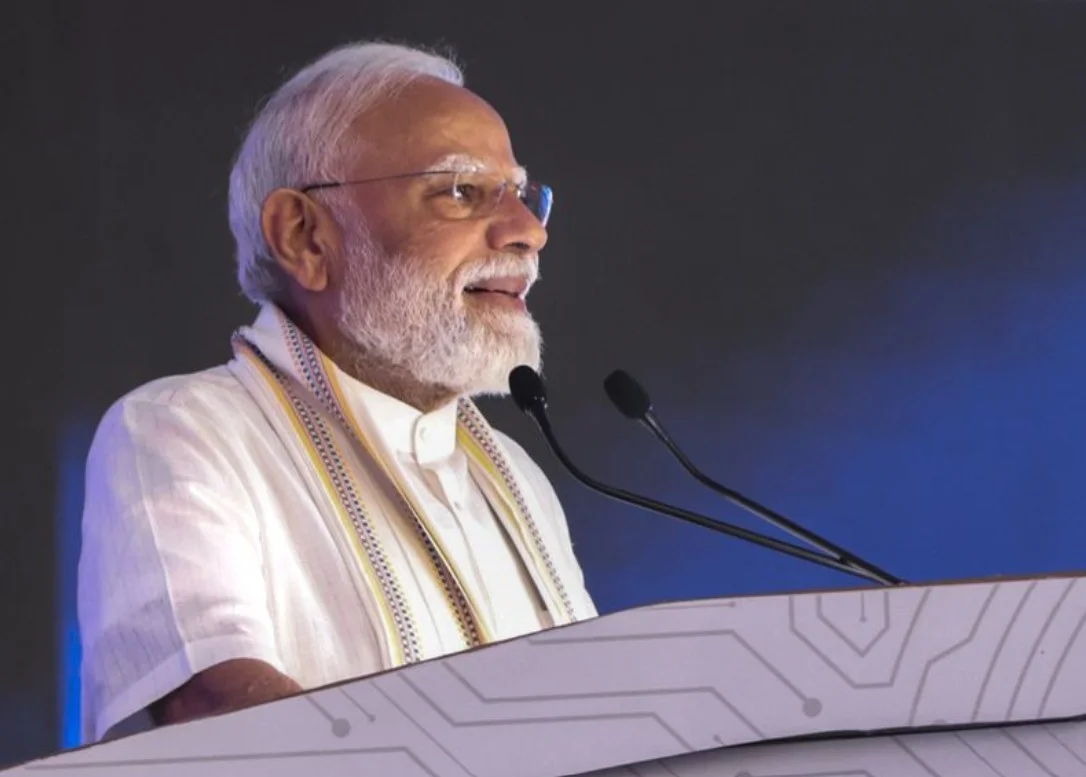


NEW DELHI, OCTOBER 2: Prime Minister Narendra Modi on Thursday called for a comprehensive evolution in India’s civil services and recruitment framework, saying future administrators must be equipped to deal with rapidly advancing technology, changing citizen expectations and emerging challenges such as artificial intelligence, deepfakes, information warfare, algorithmic bias and climate-related concerns.
Addressing the centenary celebrations of the Union Public Service Commission (UPSC) at Bharat Mandapam in New Delhi, the Prime Minister said the changing nature of society and governance demands civil servants who combine academic knowledge with foresight, empathy, innovation and the ability to address complex problems.
Modi emphasised that the recruitment process should go beyond testing what candidates know and should also examine why they want to enter public service.
He said the objective should be to bring into government service young people driven by a genuine commitment to serving citizens rather than by the attraction associated with public office.
AI and Real-Time Data Transform Citizen Expectations
The Prime Minister said the rapid expansion of technology and artificial intelligence has fundamentally changed the expectations of citizens.
With AI capable of processing vast quantities of information within seconds and governments increasingly using real-time data for decision-making, citizens now expect public services to become faster, more responsive and more accessible, he observed.
Modi said traditional administrative approaches would consequently have to evolve in keeping with the pace of the digital era and the growing demand for instant and efficient delivery of government services.
Future Administrators to Face a New Governance Landscape
Highlighting the challenges before the next generation of civil servants, the Prime Minister said administrators in the coming years would work in an environment substantially different from that faced by earlier generations.
He specifically referred to information warfare, deepfakes, algorithmic bias and climate justice as emerging areas requiring greater administrative preparedness.
He said recruitment institutions must therefore identify candidates who possess the ability to anticipate complex challenges, adapt to changing circumstances and develop innovative solutions.
‘Nation First, Citizen First’ Should Guide Civil Servants
Emphasising the core principles of public administration, Modi said civil servants must always keep two fundamental principles in mind — “Nation First” and “Citizen First.”
He also referred to the principle of “Nagrik Devo Bhava”, stressing that citizens must remain at the centre of governance and public service.
The Prime Minister said 21st-century India was moving towards a new administrative culture built around three broad principles — pro-people, proactive and good governance.
He called upon public servants to proactively identify difficulties faced by citizens and assess the actual impact of government policies and laws on people’s lives.
PM Calls for Broader Assessment of Civil Service Aspirants
Modi said recruitment and examination agencies should continuously review their selection processes to ensure that candidates are assessed from a broader perspective.
He suggested that civil service aspirants should be encouraged to reflect on their original motivation for joining public service, saying such introspection could help them remain grounded while taking on greater responsibilities.
He also encouraged the UPSC and State Public Service Commissions to explore institutionalising similar mechanisms for candidates.
Faster Examination Cycles Needed Without Compromising Standards
The Prime Minister also stressed the need for greater certainty and efficiency in recruitment examination timelines.
He urged examination authorities to reduce avoidable delays while ensuring that the quality and integrity of the selection process are not compromised.
Modi noted that prolonged examination cycles can create significant financial pressure on aspirants and their families due to expenses related to coaching, accommodation, transportation and other requirements.
He described efforts to shorten recruitment timelines as an issue linked with fairness and equity for aspirants.
UPSC Completes 100 Years of Public Service
The programme marked the culmination of year-long celebrations commemorating the 100-year journey of the UPSC, which began on October 1, 2025.
During the centenary event, the Prime Minister released a commemorative coin, a postage stamp and a book titled “100 Landmark Judgements: Shaping the Policies of UPSC and Public Service Commissions in India.”
The celebrations highlighted the evolving role of public-service recruitment in meeting the requirements of a rapidly changing India, with emphasis on citizen-centric governance, technological adaptation, ethical public service and problem-solving capabilities.
Earlier, Union Minister of State Dr Jitendra Singh described the UPSC’s century-long journey as a combination of its pre-Independence legacy and the aspirations of post-Independence India. He highlighted the Commission’s role in identifying and nurturing talent for public administration.
The centenary programme thus underscored the need for a civil service system capable of responding to the technological, social and governance challenges of the 21st century while keeping public service and citizens at the heart of administration.