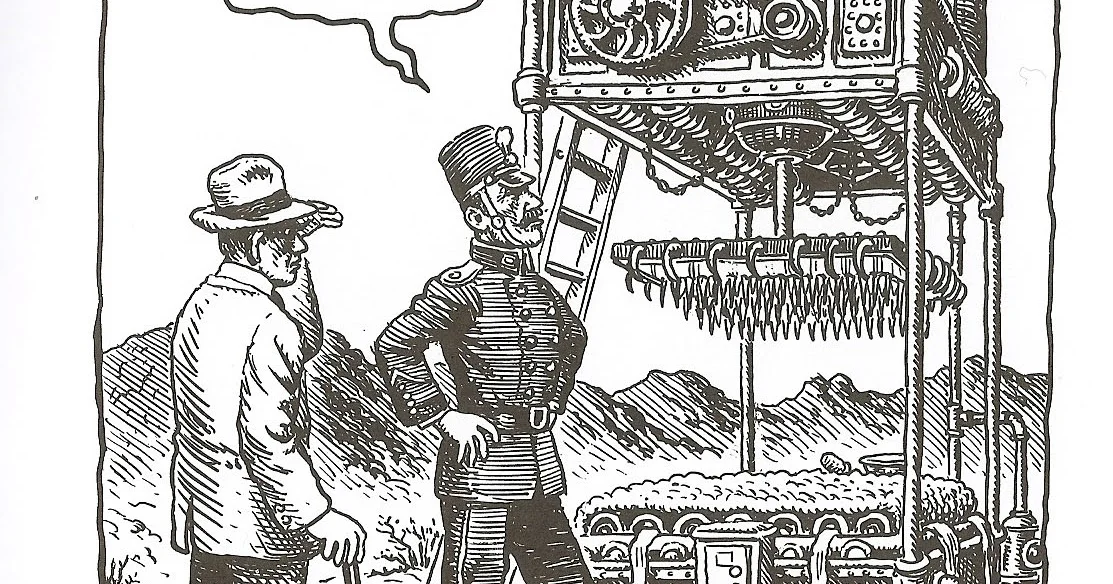


Chandigarh, Dec 12: Franz Kafka’s In the Penal Colony (1919) is a chilling, allegorical story set on an unnamed island governed by rigid authoritarian rules. The narrative follows a visiting Traveller, who is invited to witness an execution carried out by a complex torture device known as “the apparatus.”
The apparatus, designed by the now-dead Old Commandant, inscribes the prisoner’s alleged crime onto his body through needles over 12 hours, during which—according to the Officer who passionately supports the machine—the condemned attains “spiritual enlightenment.”
The Officer is an unquestioning believer in the old regime and sees the execution ritual as a sacred tradition. The new Commandant, however, disapproves of this brutal system and has begun undermining it quietly. The condemned man in this case has not even been told his crime; the Officer sees this as normal and efficient.
As the Traveller expresses increasing discomfort and refuses to endorse the practice, the Officer realizes that the apparatus has lost all legitimacy. In a dramatic reversal, he releases the prisoner and places himself in the machine—hoping it will reveal the deeper justice he believes in. But the apparatus malfunctions; instead of delivering “enlightenment,” it gruesomely kills him.
The Traveller leaves the colony without offering support to any side, symbolically distancing himself from both the old brutality and the new weak leadership.
In the Penal Colony is one of Kafka’s most disturbing and intellectually provocative works. It blends physical horror with moral philosophy, turning an execution device into a symbol of blind faith in authoritarian systems.
Bureaucratic brutality: The apparatus represents the way institutions can normalize cruelty through procedures and tradition. Obedience vs. change: The Officer embodies nostalgia for authoritarian order, while the new Commandant represents superficial reform without moral conviction. Guilt, judgment, and meaning: The condemned man’s ignorance of his crime highlights Kafka’s recurring tension between judgment and the unknowable logic of authority.
The moral bystander: The Traveller’s neutrality raises an uncomfortable question: is refusing to intervene an ethical stance or a subtle complicity?
Kafka’s tone is clinical, almost detached, which intensifies the horror. The calm description of torture machinery mirrors how violence becomes mundane in rigid systems. The story’s physical environment—heat, machinery, isolation—adds an oppressive atmosphere.
This is not just a tale of punishment; it is a critique of systems sustained by tradition rather than morality. Kafka exposes how violence hides behind “procedure,” how loyalty to old orders can become self-destructive, and how outside observers often escape responsibility by claiming neutrality.
In the Penal Colony remains a powerful political and psychological text—unsettling, ambiguous, and fiercely relevant when discussing state power, justice, and human dignity.