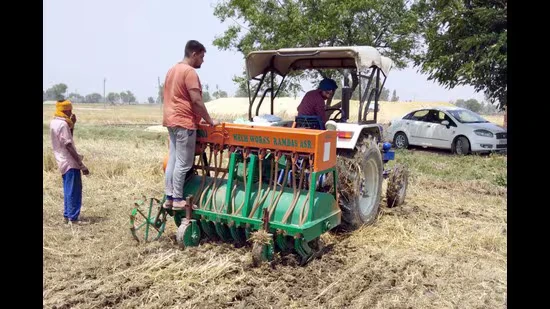


Chandigarh, Jan 30: Significant numbers of crop residue management machines in Punjab have been declared non-functional, with official data revealing that nearly 25 percent of the equipment distributed since 2018 is no longer in use. In an action plan submitted to the Commission for Air Quality Management on January 28, the state government disclosed that out of 1.58 lakh subsidized machines provided to farmers, approximately 40,000 are currently redundant. This development comes as the state continues its efforts to manage nearly 190 lakh tonnes of paddy straw generated annually across 30 lakh hectares of cultivation.
The decline in operational machinery is attributed to both the natural conclusion of equipment lifespans and the rapid evolution of agricultural technology. Implements like Happy Seeders and Super Seeders are essential for managing straw without resorting to burning, which remains a primary cause of winter smog in northern India. While the state has seen a decrease in fire incidents—dropping to 5,114 cases in the 2025 kharif season from over 10,000 the previous year—the sustainability of the multi-crore subsidy program remains a central focus for officials.
“The average lifespan of these machines is about five years and rapid technological upgrades have also rendered many older models obsolete,” Punjab agriculture director Jaswant Singh mentioned. He noted that the progression of technology has been swift, stating that “The Happy Seeder, which was widely used in 2018 and 2019, was replaced by the Smart Seeder, and now the Super Seeder is in use.”
To address the ongoing challenge, the state’s department of science and technology has proposed a fresh 500 crore action plan for the upcoming season. This initiative aims to provide an additional 15,000 machines and implements to farmers. Chief secretary KAP Sinha is expected to review this proposal, which may involve requests for further financial support to ensure comprehensive coverage during the narrow window between the paddy harvest and wheat sowing.
“The focus in the upcoming kharif harvest will be on eight hotspot districts, particularly villages that continue to burn paddy stubble,” Jaswant Singh directly said. These districts include Sangrur, Ferozepur, and Tarn Taran, where fire counts have remained higher than in other regions. Since 2022, the funding for these initiatives has transitioned to a 60:40 sharing pattern between the Centre and the state government.