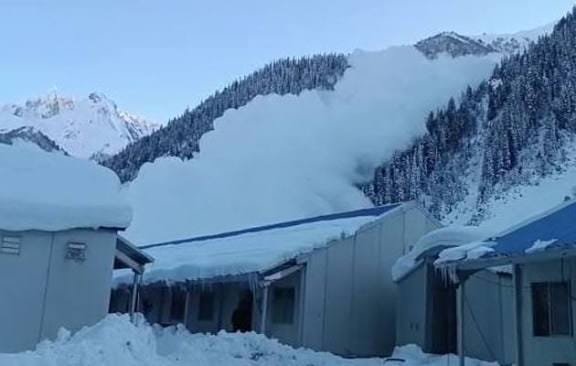


Chandigarh, Jan 28: Climate change represents a long-term shift in temperatures and weather patterns, primarily driven by human activities that release heat-trapping gases into the atmosphere.
While the global conversation often focuses on rising sea levels and heatwaves, the impact on mountainous regions is becoming increasingly evident through altered snow cycles and landscape stability.
These shifts create a complex ripple effect that directly influences the frequency and intensity of natural disasters in high-altitude areas.
Deforestation plays a pivotal role in destabilizing these environments, serving as a primary catalyst for increased avalanche activity. Trees act as a natural physical anchor for the snowpack, with their trunks breaking up the continuity of the snow blanket and preventing large slabs from sliding as a single unit.
When forests are cleared, these mechanical anchors are removed, leaving vast, uninterrupted slopes of snow that are far more susceptible to the pull of gravity.
Beyond physical anchoring, the canopy of a forest regulates the local microclimate by providing shade and wind protection. In a forested area, the trees prevent the wind from creating dangerous “wind slabs”—compacted layers of snow that are a leading cause of avalanches.
Without the protective shield of foliage, the sun and wind act directly on the snow surface, leading to rapid temperature fluctuations that create weak, brittle layers within the snowpack.
The loss of root systems further exacerbates the risk during the transition between seasons. Roots hold the soil together and help manage water runoff from melting snow.
In deforested regions, the ground becomes less stable and more prone to sliding, which can trigger a “full-depth” avalanche where the entire snowpack and the underlying debris move together.
As global temperatures rise and forest boundaries shift or diminish, the natural defense systems of our mountains are being stripped away, making alpine regions increasingly volatile.