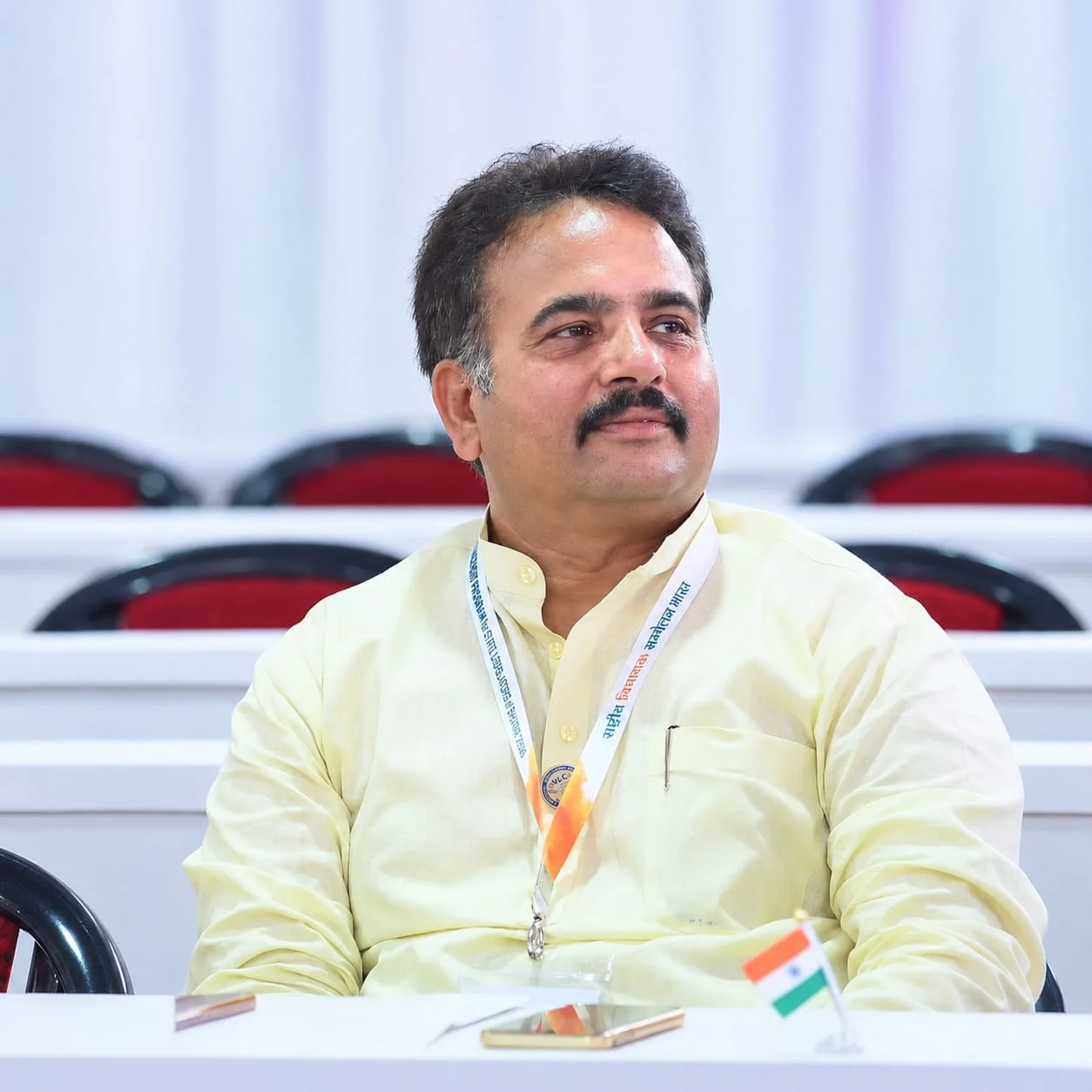


By Sanjay Sharma, Member, Uttar Pradesh Legislative Assembly
Uttar Pradesh stands at an important crossroads in its economic journey. With a population of more than 240 million, a large young workforce and an ambition to become a one-trillion-dollar economy, the state needs more than investment alone. It needs a culture of productivity, innovation, discipline and continuous improvement.
The partnership between Uttar Pradesh and Japan’s Yamanashi Prefecture offers an opportunity to build precisely that.
Japan’s remarkable industrial transformation is closely associated with Kaizen — a philosophy of continuous improvement. Derived from the Japanese words Kai, meaning change, and Zen, meaning betterment, Kaizen encourages organisations and individuals to make small, consistent improvements in the way they work. Over decades, this approach has helped establish Japan as a global benchmark for quality, precision and technological excellence.
For Uttar Pradesh, adopting the underlying spirit of Kaizen could be equally transformative. The objective is not to replicate Japan, but to combine Japanese expertise with the energy, scale and aspirations of Uttar Pradesh’s young population.
Building a high-tech manufacturing ecosystem
One of the most promising areas for this partnership is advanced manufacturing.
The Noida-Greater Noida-Yamuna Expressway region is already emerging as an important electronics and manufacturing hub. Japanese investment in semiconductor fabrication, chip design, assembly and other high-technology industries could accelerate the development of an integrated supply chain within Uttar Pradesh.
Such investment would have benefits beyond direct employment. A strong anchor industry can create demand for hundreds of suppliers, component manufacturers, service providers and ancillary businesses. This, in turn, can encourage entrepreneurship and give local MSMEs an opportunity to become part of global value chains.
Japan’s experience in automation, robotics and precision manufacturing can further help Indian companies improve productivity and meet international quality standards.
Technology must go hand in hand with sustainability
The next phase of industrial growth must also be environmentally sustainable. Japan’s expertise in green hydrogen, electric mobility and advanced battery technologies can complement Uttar Pradesh’s efforts to modernise its energy and transport sectors.
Collaboration in these areas could help the state develop cleaner industrial processes while creating new employment opportunities in emerging technologies.
The proposed Japanese industrial township in the YEIDA region can become an important part of this ecosystem. With the right combination of infrastructure, technology companies, MSMEs and support services, such a cluster could serve as a platform for innovation and high-value manufacturing.
The real investment is in people
Technology, however, can deliver results only when people have the skills to use it.
This makes skill development one of the most important pillars of the UP-Yamanashi partnership. Japanese companies could help establish specialised institutions focused on manufacturing and industrial skills, giving young people practical exposure to modern production systems.
Such institutions should teach not only technical skills but also the principles that underpin Japanese work culture — attention to quality, punctuality, efficiency, teamwork and continuous improvement.
If the spirit of Kaizen becomes part of the working culture of Uttar Pradesh’s youth, the state could develop a workforce that is competitive not only within India but across global manufacturing markets.
Connecting classrooms with industry
A durable transformation must begin in educational institutions.
Greater collaboration between Japanese companies and institutions such as IIT Kanpur, IIT-BHU, ITIs and polytechnic colleges could help redesign courses around emerging industrial requirements. Robotics, artificial intelligence, mechatronics, semiconductor technology and advanced manufacturing should become integral parts of technical education.
Japanese language and cultural studies can also have a valuable role. Young people trained in both technology and Japanese language would be better positioned to work with Japanese companies in India and explore employment opportunities in Japan and other international markets.
Language, in this context, is more than communication. It can become a bridge for building professional relationships, mutual understanding and long-term partnerships.
Infrastructure creates the confidence to invest
Investment on this scale requires dependable infrastructure and policy stability. Uttar Pradesh has been strengthening its expressway network, logistics infrastructure and industrial corridors while improving systems for facilitating investment.
For Japanese investors, who often take a long-term view and place considerable emphasis on reliability and stability, these developments can provide an important foundation.
When modern infrastructure is combined with policy clarity, skilled workers and a willingness to embrace technology, investment can move beyond announcements and translate into factories, research centres, supply chains and jobs.
The UP-Japan Investment Summit therefore represents more than an investment opportunity. It can become a platform for a broader economic and social transformation.
The meeting of Japan’s technological capability and culture of continuous improvement with Uttar Pradesh’s scale, youthful energy and entrepreneurial ambition can create a distinctive new growth model.
If implemented with vision and consistency, the UP-Yamanashi partnership can help connect millions of young people with high-skill employment, strengthen manufacturing ecosystems, promote greener technologies and spread economic opportunity beyond major cities.
Ultimately, the greatest outcome will not simply be the number of investments secured. It will be the creation of a new youth culture in Uttar Pradesh — one that values skills, precision, innovation, discipline and the constant pursuit of improvement.
That could be the most enduring foundation for Uttar Pradesh’s journey towards a one-trillion-dollar economy.