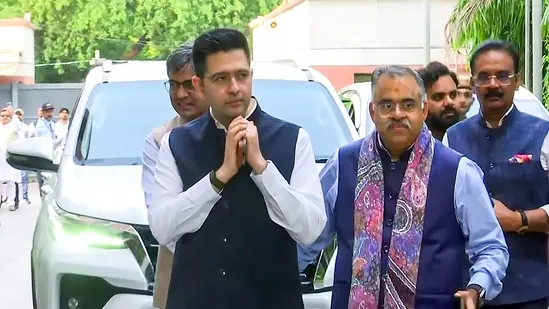


Chandigarh, APRIL 27: The political landscape of Punjab has undergone a dramatic transformation in the Rajya Sabha, creating a unique paradox where the Bharatiya Janata Party (BJP) now holds nearly all of the state’s Upper House seats despite having minimal representation in the state assembly.
The Statistical Paradox
The current situation shows a stark contrast between electoral performance and parliamentary presence:
The 2022 Mandate: In the last assembly elections, the BJP secured only 6.6% of the vote, winning just 2 out of 117 seats.
The “Merger” Shift: Following the defection and subsequent merger of six out of seven AAP Rajya Sabha MPs from Punjab, the BJP now controls 86% of the state’s Rajya Sabha seats (6 out of 7).
The Result: A party that has never won Punjab on its own now holds a dominant parliamentary voice for the state, achieved through political realignment rather than the ballot box.
Who are the Defecting MPs?
The group that transitioned to the BJP includes high-profile figures who were once central to the AAP’s core strategy and image:
The Strategists: Raghav Chadha and Sandeep Pathak, formerly key architects of AAP’s 2022 victory.
The Professionals & Business Titans: Ashok Mittal (Lovely Professional University), Vikramjit Singh Sahney (Sun Foundation), and Rajinder Gupta (Trident Group).
The Icon: Former Indian cricketer Harbhajan Singh.
The Outlier: From Delhi, activist Swati Maliwal also joined the merger, further depleting AAP’s national Rajya Sabha strength.
The Question of Legitimacy
This shift has triggered a debate over democratic ethics and the “spirit” of the Tenth Schedule (Anti-Defection Law):
The “Indirect” Mandate: Critics, including Congress treasurer Ajay Maken, point out that Rajya Sabha members are elected by MLAs. With only two BJP MLAs in the Punjab Assembly, the party technically lacks the electoral mandate to send even a single representative to the Upper House from the state.
The “Outsider” Narrative: Both Chief Minister Bhagwant Mann and remaining AAP MP Balbir Singh Seechewal have characterized the defectors as “non-mass leaders.” Mann asserted that many of them could not win a village sarpanch election, while Seechewal noted that figures like Chadha enjoyed immense power in Chandigarh (operating from the famous “Kothi No. 50”) without being grounded in local struggles.
Historical Context: 1998 to 2026
Historically, the BJP’s presence in Punjab’s Rajya Sabha contingent was tied to its alliance with the Shiromani Akali Dal (SAD).
- Between 1998 and 2022, the BJP had only four Rajya Sabha MPs from Punjab across 24 years, acting as a junior partner.
- Since the 2020 split with the SAD over the farm laws, the BJP has struggled to find a footing, winning no seats in the 2024 Lok Sabha elections despite increasing its vote share to 19%.
What Lies Ahead?
The merger gives the BJP a massive tactical boost in Parliament but leaves significant hurdles for the 2027 Assembly polls:
Stability: While SAD leaders like Bikram Singh Majithia have called for a floor test, the AAP maintains a comfortable majority in the Assembly (94 seats).
The “Satyagraha” Defense: AAP leaders, including Manish Sisodia, are currently working to prevent further “Operation Lotus” style defections among state MLAs.
The Public Perception: The BJP must now explain to the Punjab electorate how it represents their interests in the Rajya Sabha while holding only a fraction of the state’s legislative power.