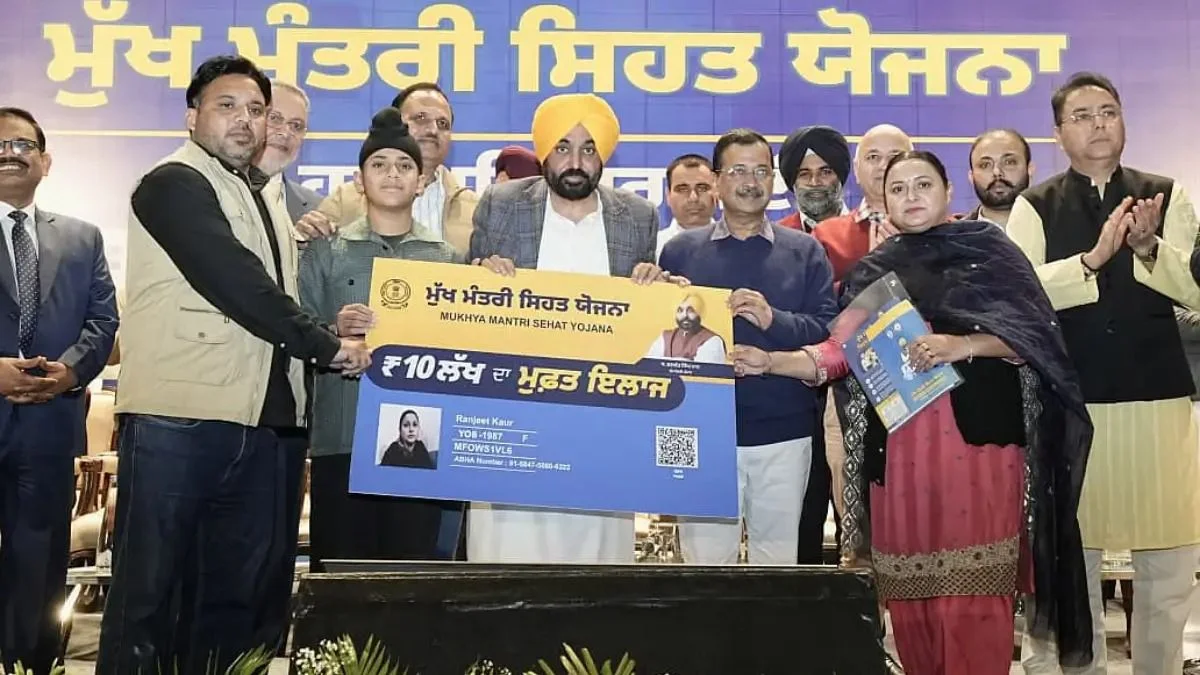


Chandigarh, May 25: The Punjab government has significantly scaled up its high-risk maternal and neonatal healthcare infrastructure through the Mukh Mantri Sehat Yojana, ensuring critical obstetric interventions and newborn treatments are delivered without financial burden to families. The specialized welfare program has successfully facilitated thousands of complicated surgical deliveries and advanced infant care procedures across the state.
According to latest indicators from the State Health Agency, the health card initiative has covered a total of 7,300 maternity and neonatal cases, amounting to an expenditure of Rs 7.04 crore. The data underscores a major operational focus on emergency obstetric care, with 5,300 high-risk caesarean deliveries alone accounting for Rs 6.37 crore of the total disbursement.
Beneficiaries across Punjab maintained that the cashless facility has altered how low-income families experience emergency hospitalizations.
“Anytime there is a medical emergency, we have to borrow money on interest,” asserted Vikas Sonkar, a daily wage laborer whose wife received critical maternal care during a complicated third delivery. “But with the Sehat Card, everything has been taken care of.”
The initiative concurrently provides structural backing for specialized neonatal treatments targeting critically ill, underweight, or premature newborns. State healthcare data shows that 2,094 infants have received specialized treatment across multiple tiered care packages designed to handle varying levels of clinical severity.
A breakdown of the neonatal operations reveals that the Basic Neonatal Care package supported 881 infants managed alongside their mothers, involving an expenditure of Rs 5.82 lakh. The Special Neonatal Care Package facilitated short-term ICU admissions for 777 infants at a cost of Rs 28.27 lakh, while the Intensive Neonatal Care Package covered 207 newborns requiring CPAP support, brief ventilation, or sepsis management, totaling Rs 15.65 lakh.
For highly vulnerable cases, the Advanced Neonatal Care segment provided Rs 9.30 lakh in medical coverage for 116 infants weighing under 1,500 grams or requiring prolonged ventilator assistance. Furthermore, Critical Neonatal Care supported 64 infants experiencing extreme prematurity or multi-system complications with a payout of Rs 7.88 lakh, while prolonged chronic care treatments for severe conditions like bronchopulmonary dysplasia supported 17 infants.
The widespread integration of these emergency maternal services aligns with broader state efforts to mitigate the high-risk factors identified in national healthcare studies, including previous birth complications and poverty. The Mukh Mantri Sehat Yojana continues to expand its consumer safety net, with total state registrations currently reaching approximately 44.8 lakh individuals.