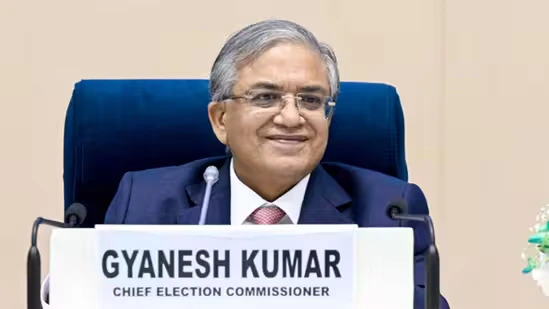


New Delhi, May 14: The Election Commission of India announced on Thursday the commencement of Phase 3 of the Special Intensive Revision (SIR), a comprehensive drive to update and cleanse the nation’s voters’ list. This latest phase encompasses 16 states and three Union Territories, including Delhi, Maharashtra, Punjab, and Haryana. Officials stated that once this stage is finished, the entire country will be covered by the initiative, with the exception of Jammu and Kashmir, Ladakh, and Himachal Pradesh.
The poll body noted that the house-to-house verification process is scheduled to take place between May 30 and October 14. During this period, over 3.94 lakh Booth Level Officers (BLOs) will visit households to verify 36.73 crore electors. The Commission maintained that this participative exercise relies heavily on the cooperation of political parties, who are expected to appoint 3.42 lakh Booth Level Agents to assist in the field. “SIR is a participative exercise involving all stakeholders including electors, political parties and election officials,” the ECI affirmed.
Originally launched in Bihar last year, the SIR was established to address concerns regarding duplicate, ineligible, or deceased voters. The commission asserted that the primary objective is to remove “bogus” entries and ensure the electoral roll remains an accurate reflection of the eligible population. The ECI stated that the draft electoral rolls for the current phase are expected to be published between July 5 and October 21, depending on the specific state.
According to official data, the first two phases of the program covered approximately 59 crore electors across 13 states and UTs. The Commission maintained that the involvement of both government officials and political agents is vital for maintaining transparency throughout the cleansing drive. Authorities urged all political stakeholders to ensure full participation to facilitate a fair and updated list before future electoral cycles.