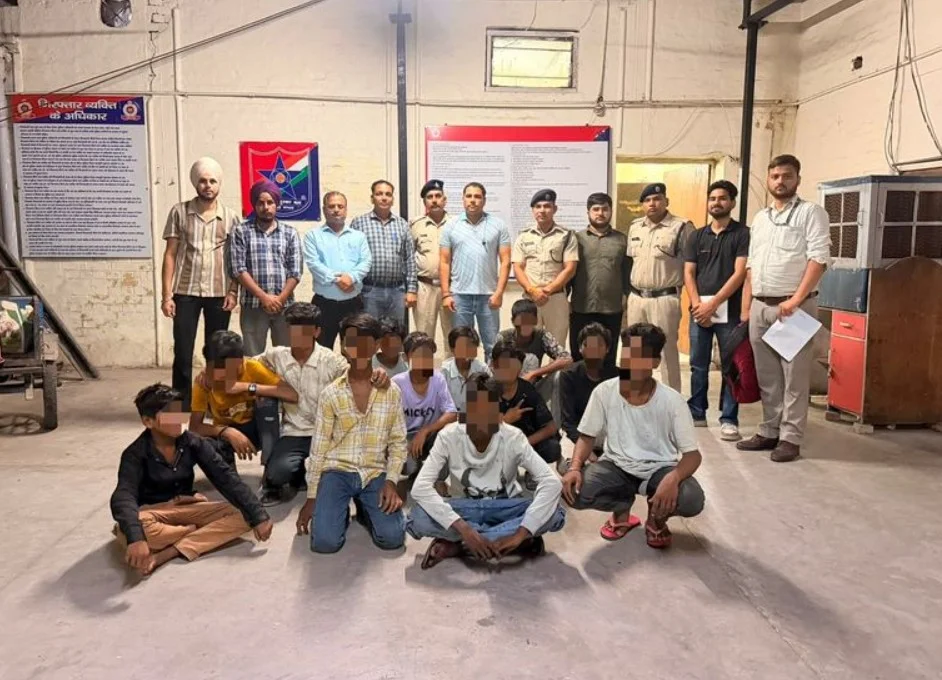


Chandigarh, July 10: A multi-agency task force rescued eighteen minor children from two separate trains at the Ambala Cantonment Railway Station during consecutive nighttime operations. The joint rescue, executed by the Railway Protection Force, the Anti-Human Trafficking Unit, and the Zila Yuva Vikas Sangathan, intercepted the children before they could be transported into Punjab for illegal labor. The minors, who originate from economically vulnerable backgrounds in Bihar, Uttar Pradesh, and West Bengal, have since been placed in protective custody.
The coordinated action took place over Wednesday and Thursday nights following specific intelligence about the movement of traffickers. Representatives from the rescue team stated that twelve children were rescued from the Jan Nayak Express on Wednesday night, and six other children were rescued from the Karmabhoomi Express on Thursday. Following their extraction from the trains, all the children were produced before the Child Welfare Committee in Ambala and subsequently shifted to the local Open Shelter Home to ensure their proper care.
Interviews with the rescued minors revealed the specific industries and meager wages awaiting them in Punjab. Program coordinators affirmed that three children were being taken to Ludhiana to work under a painting contractor for nearly Rs 5,000 per month, while two others were destined for a jacket manufacturing unit in the same city. Another three children stated that they were being taken to work in an orchard, with the remaining minors scheduled for various other manual labor assignments across the region.
The operation highlights a persistent challenge for regional law enforcement and social organizations fighting human trafficking on public transport. Social leaders declared that contractors routinely lure economically vulnerable families with false promises of employment and better wages for their minor children. Organizers maintained that railway routes are increasingly being used as a major means of child trafficking, adding that timely information and effective coordination among departments remain essential to protecting children from exploitation.