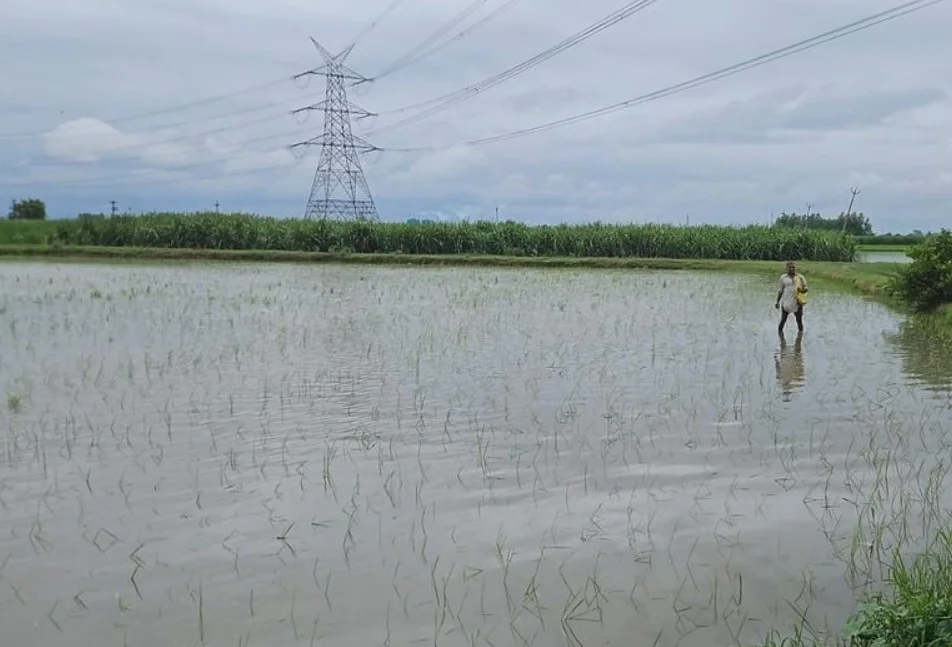


Karnal, July 10: A continuous three-day spell of rainfall across Haryana has provided major relief to agricultural communities, rapidly accelerating the state’s lagging paddy transplantation. The downpour effectively countered a dry June and eased widespread agricultural anxieties regarding an early-season outbreak of the Southern Rice Black-streaked Dwarf Virus, which is commonly known as the dwarf virus. According to the Agriculture and Farmers Welfare Department, around fifteen percent more paddy transplantation has been completed during the last three days due to favorable weather, pushing the covered area in Karnal district to eighty-five percent of its designated seasonal target.
The timely moisture has lowered overheads for regional growers by serving as an organic nutrient supplement. Dr Wazir Singh, Deputy Director Agriculture, Karnal, stated that this rainfall has encouraged farmers who were waiting for adequate water to begin transplanting paddy. The official declared that the showers have proved to be a boon for the crop as they have reduced the immediate requirement for urea, which will reduce cultivation costs for farmers.
The state government has established an ambitious agricultural roadmap for this season, designating specific regional quotas to maximize rice production. For the current cycle, the department has set a target of bringing 15.60 lakh hectares under paddy cultivation, with Karnal holding the highest district-level assignment at 1.85 lakh hectares. Kaithal follows closely at 1.65 lakh hectares, while Jind, Sirsa, and Fatehabad have been given targets of 1.50 lakh, 1.45 lakh, and 1.35 lakh hectares respectively.
The heavy downpours were led by Nilokheri block, which recorded the highest localized rainfall at 84.4mm, followed by Indri at 60mm and Karnal block at 44mm. Local growers expressed immense relief after a challenging start to the summer. Inderjeet Singh, a farmer of Nilokheri block, affirmed that the rainfall was much required at this time and came at the right moment. Growers maintained that poor rainfall in the month of June had previously forced them to delay their transplantation schedules, but the recent continuous showers have finally eased their concerns and irrigated the fields.