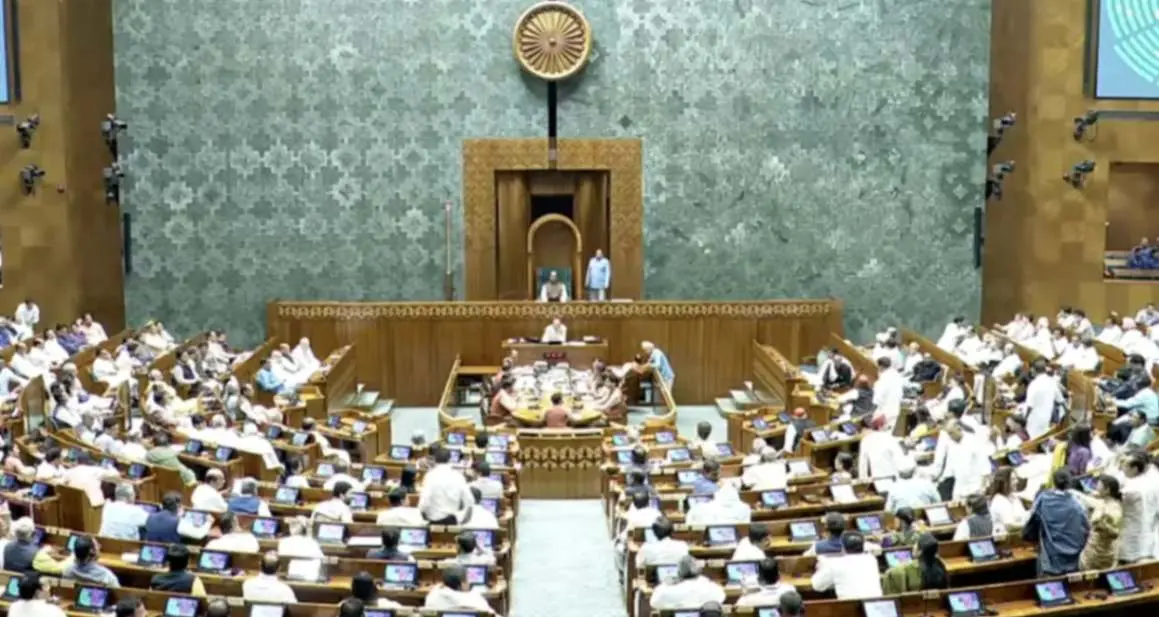


New Delhi, July 27: Parliamentary proceedings faced early disruptions following the introduction of the Public Examinations (Prevention of Unfair Means) Amendment Bill, 2026, aimed at establishing stricter legal measures against examination malpractices across the country.
Union Minister Dr Jitendra Singh tabled the legislative proposal in the Lok Sabha around noon, after which proceedings were temporarily adjourned amid opposition demonstrations.
“Disrupting the session rather than participating in the discussion on a concrete anti-leak bill sends out a poor message,” stated Parliamentary Affairs Minister Kiren Rijiju while appealing to opposition parties to join the debate.
Opposing voices raised questions regarding the preventive efficacy of the proposed law, with Congress MP Karti Chidambaram asserting that the framework remains focused on penalties rather than preventing paper leaks at the onset.
The governing alliance strategy involves fielding a panel of younger lawmakers, including Bansuri Swaraj and Tejasvi Surya, to participate in an expected eight-to-ten-hour debate alongside multi-party representatives.
The proposed amendments to the 2024 Act introduce penalties ranging from 5 to 10 years of imprisonment and fines up to ₹50 lakh for individuals involved in unfair means, while penalties for organized syndicates extend to ₹10 crore with a minimum 7-year jail term.
The legislative move follows widespread public scrutiny over national examination conduct, coinciding with the establishment of a high-powered task force led by Infosys co-founder Nandan Nilekani to recommend broader structural overhauls.