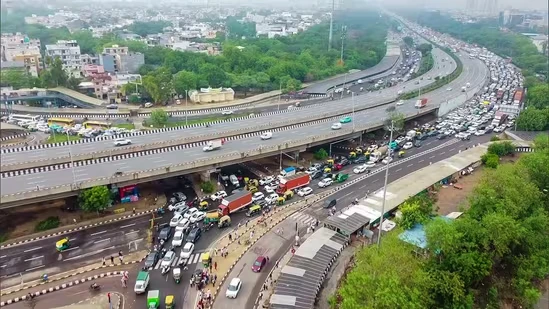


New Delhi, July 9: The India Meteorological Department has placed all districts of Delhi under a red alert following relentless overnight rainfall that has paralyzed the national capital region. The intense weather system has triggered widespread waterlogging, brought vehicular traffic to a crawl, and prompted official advisories urging citizens to restrict outdoor movement. Regional weather experts tracking the monsoon pattern confirmed that the area is entering an extremely volatile phase as it sits directly in the western quadrant of an active low-pressure system.
Parallel warnings have been extended to neighboring industrial and residential hubs, where emergency teams are monitoring rising water levels. According to the meteorological department’s morning updates, an orange alert remains active for Gurugram, Noida, Ghaziabad, and Meerut, with heavy to intense downpours expected to persist throughout the day.
Independent meteorologists monitoring the core atmospheric indicators have warned that the coming hours will bring the most intense conditions. Weather analyst Navdeep Dahiya stated that the region is experiencing a massive rainfall event, noting that the next twelve hours until late evening remain the most critical for local infrastructure. Dahiya asserted that consistent light to moderate showers will occur alongside frequent spells of heavy downpours, with fresh accumulations of up to 200 millimeters threatening parts of Noida, Ghaziabad, and eastern Delhi.
The volume of precipitation is projected to vary across different sectors of the metropolitan zone, though all areas face significant urban flooding risks. Central, west, and south Delhi, along with Faridabad, are expected to receive between 100 and 150 millimeters of rain, while Gurugram could see up to 150 millimeters. Outer regions, including east-central Haryana and Chandigarh, are also on track to receive substantial spells measuring up to 100 millimeters.
With the monsoon system showing no immediate signs of clearing, local administrations have begun deploying pumps to clear major transit points. Weather monitors concluded that residents should avoid heading outdoors unless absolutely necessary due to the high probability of severe water logging across the eastern sections of the capital network.