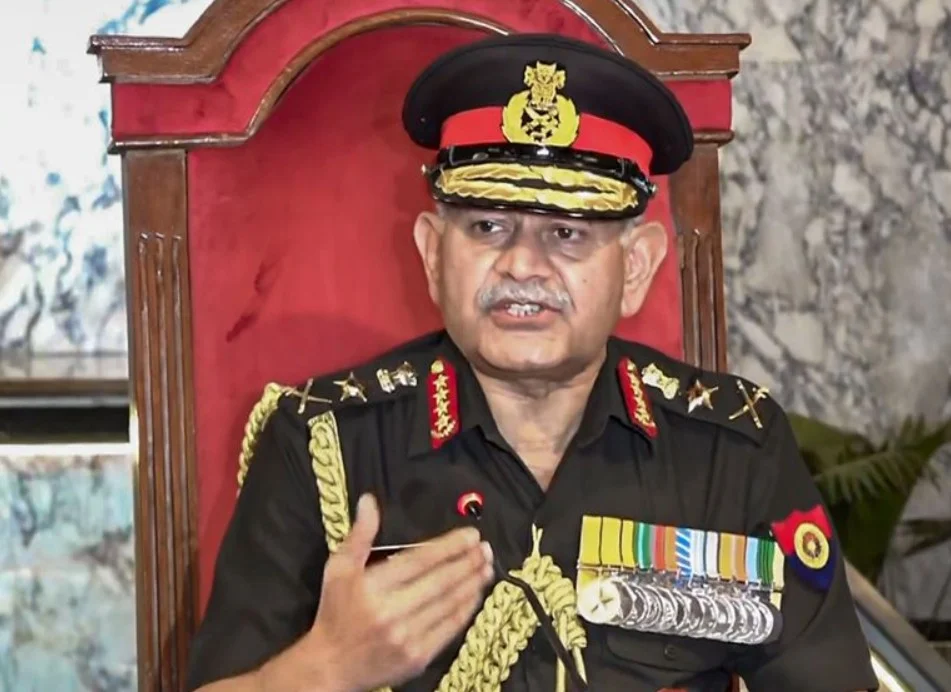


PUNE, MAY 30 — Chief of Army Staff General Upendra Dwivedi stated Saturday that future military conflicts will transcend traditional geographical spaces to encompass land, air, space, cyber, electromagnetic, and cognitive fields.
Reviewing the passing-out parade of the landmark 150th course at the National Defence Academy, the Army Chief noted that the modern security climate demands quick tactical adjustment from incoming officers. He asserted that contemporary security threats frequently emerge outside of established fronts, rendering modern battlefields highly transparent to adversarial observation around the clock.
“From contested grey zones to high-velocity hybrid warfare, today’s security environment demands that those who serve must think sharply as they act,” General Dwivedi stated before the graduating assembly at the Khetarpal Parade Ground.
The Army Chief cited the strategic outcomes of Operation Sindoor to demonstrate the military’s capability to execute precise and calibrated retaliatory actions. He noted that the joint service maneuver underscored the necessity of real-time intelligence gathering, advanced air defenses, and secure communications arrays operating across multiple structural domains simultaneously.
General Dwivedi noted that the defense establishment remains focused on structural evolution under a designated decade of transformation. He stated that the implementation of specialized modern formations, including Divyastha Batteries, Shaktimaan Regiments, and Bharat Battalions, reflects an active commitment to incorporating automation and advanced technological resources into the front lines.
“In today’s environment, we also have numerous drones coming,” General Dwivedi stated, explaining that drone operations and simulation programs are currently integrated across all national training academies. “Now, you need counter-drone equipment, and you need to apply your own drones. Therefore, the resources present on the battlefield are enormous. To handle such resources, you need some kind of automation, and artificial intelligence plays a very pivotal role.”
The review carried a strong personal connection for the Army Chief, who graduated from the academy’s 65th course as a member of Charlie Squadron before advancing through the military ranks. The graduation ceremony concluded with the formal commissioning of 355 tri-services cadets, including international candidates from 12 partner nations, into their respective military branches.