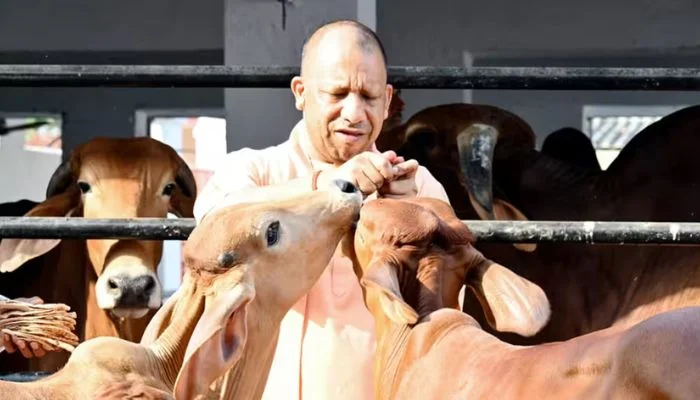


Lucknow, June 15: Uttar Pradesh has developed a comprehensive economic framework for indigenous cow protection, with traditional Ayurvedic and Panchgavya products manufactured in the state increasingly finding markets in international destinations, including the United States, Germany, Japan, Australia, and multiple Gulf nations.
Under the policy directives of Chief Minister Yogi Adityanath, the state has linked animal welfare directly with rural entrepreneurship, transforming traditional dairy and livestock management into an organized industry.
Nearly 200 distinct products derived from indigenous cattle—such as Panchgavya Ghrit, Brahmi Ghrit, Gomutra Ark, and specialized Ayurvedic skin and health supplements—are currently being exported to global regions like North America, Southeast Asia, and the Middle East due to rising international interest in natural alternative medicine.
The strategy focuses on establishing cowsheds, local self-help groups, and rural startups as financially independent entities by utilizing all resources from indigenous cattle breeds to generate regular village income.
The system has attracted interest from other parts of the country as well, with teams and individuals from 15 states, including Gujarat, Kerala, Maharashtra, Haryana, and Punjab, actively taking part in training programs focused on breed improvement, scientific management, and livestock-based business frameworks.
“If products from indigenous cows are developed scientifically and connected to markets, this sector can play a major role in strengthening the rural economy of India,” asserted Asim Rawat, a former software engineer based in Ghaziabad whose enterprise, HETHA, provides training to external state delegations after establishing an export footprint.
To sustain this livestock development model, the state administration is offering financial incentives to encourage farmers and rural entrepreneurs.
Mukesh Meshram, Additional Chief Secretary of the Animal Husbandry Department, declared that the government provides subsidies of up to 50 percent for rearing improved indigenous cow breeds, with targeted conservation programs currently prioritizing traditional lineages such as Sahiwal, Gir, Gangatiri, and Tharparkar to boost the broader dairy economy.