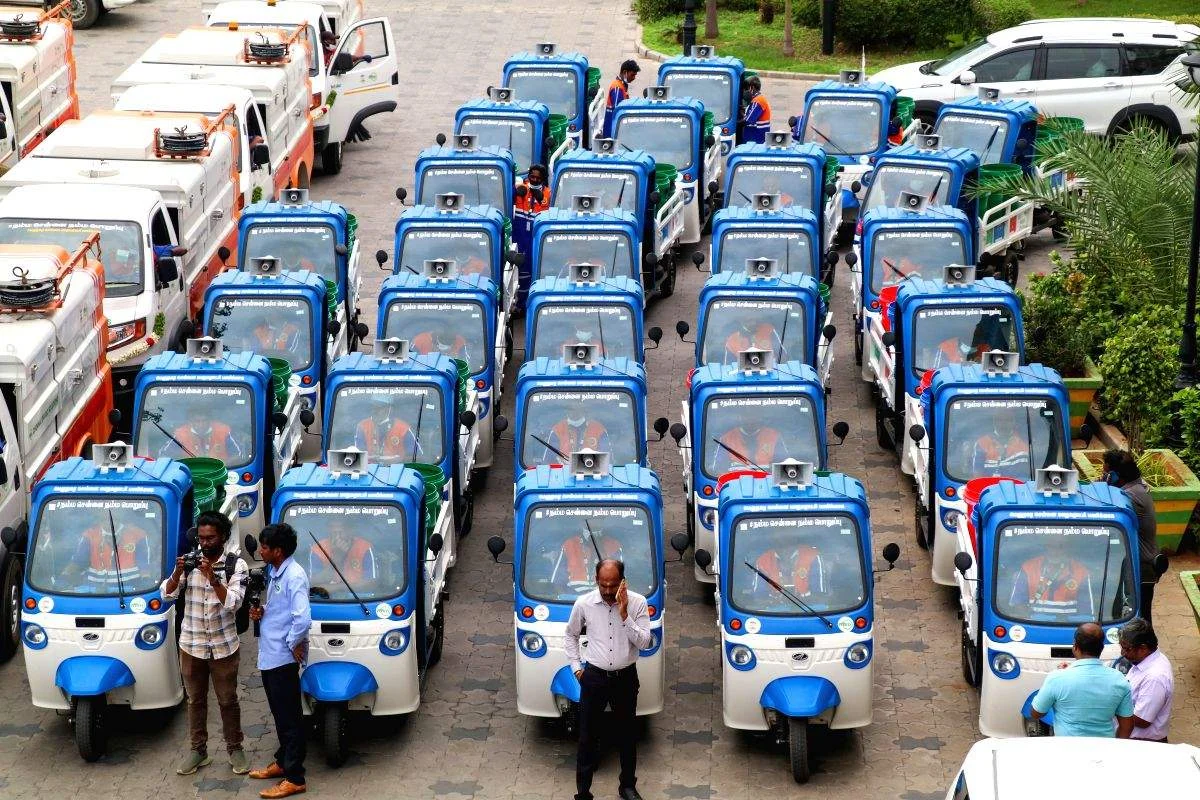


Lucknow, July 8: The Uttar Pradesh government’s proactive push for green energy has triggered a massive surge in electric vehicle adoption across both major urban centers and smaller districts. Backed by the state’s Electric Vehicle Manufacturing and Mobility Policy-2022, the initiative is successfully driving public interest, with the state capital emerging as the frontrunner in the green transition.
“A subsidy of up to ₹20 lakh is being provided on non-government electric buses, up to ₹1 lakh on four-wheel electric vehicles, and up to ₹5,000 on electric two-wheelers,” Transport Minister Dayashankar Singh declared while detailing the financial structure of the policy. He asserted that a greater shift toward these options would actively help achieve the goal of zero emissions and contribute to a cleaner environment.
Data compiled by the Transport Department reveals that the Transport Nagar RTO in Lucknow has logged the highest volume of applications under the subsidy scheme, standing at 12,520. Agra follows closely with 10,752 applications, while Gautam Buddha Nagar reported 6,088, Ghaziabad registered 5,556, and Varanasi recorded 4,059. The momentum is equally evident in smaller regions, where districts like Mau, Ghazipur, and Kushinagar have received 817, 750, and 547 applications respectively, proving that confidence in alternative mobility is spreading evenly across the state.
Beyond environmental conservation, the scheme offers substantial direct financial relief to buyers. Purchases of electric two-wheelers attract a flat state subsidy alongside a complete exemption on road tax and registration charges, allowing buyers to save approximately ₹18,000 when factoring in waived RC and HSRP fees. Department officials maintained that consumers stand to benefit long-term due to the significantly lower per-kilometer operating costs of these vehicles compared to traditional petrol and diesel alternatives.
The state’s accelerated adoption timeline aligns directly with broader national goals aimed at curbing heavy resource expenditure. Transport officials affirmed that if electric options manage to constitute 20 percent of all operating vehicles in the country by 2030, India could successfully save nearly ₹1 lakh crore on its crude oil import bill. Uttar Pradesh is positioned to play a defining role in meeting this target by continuing to expand the reach of its financial incentives to a larger section of the public.