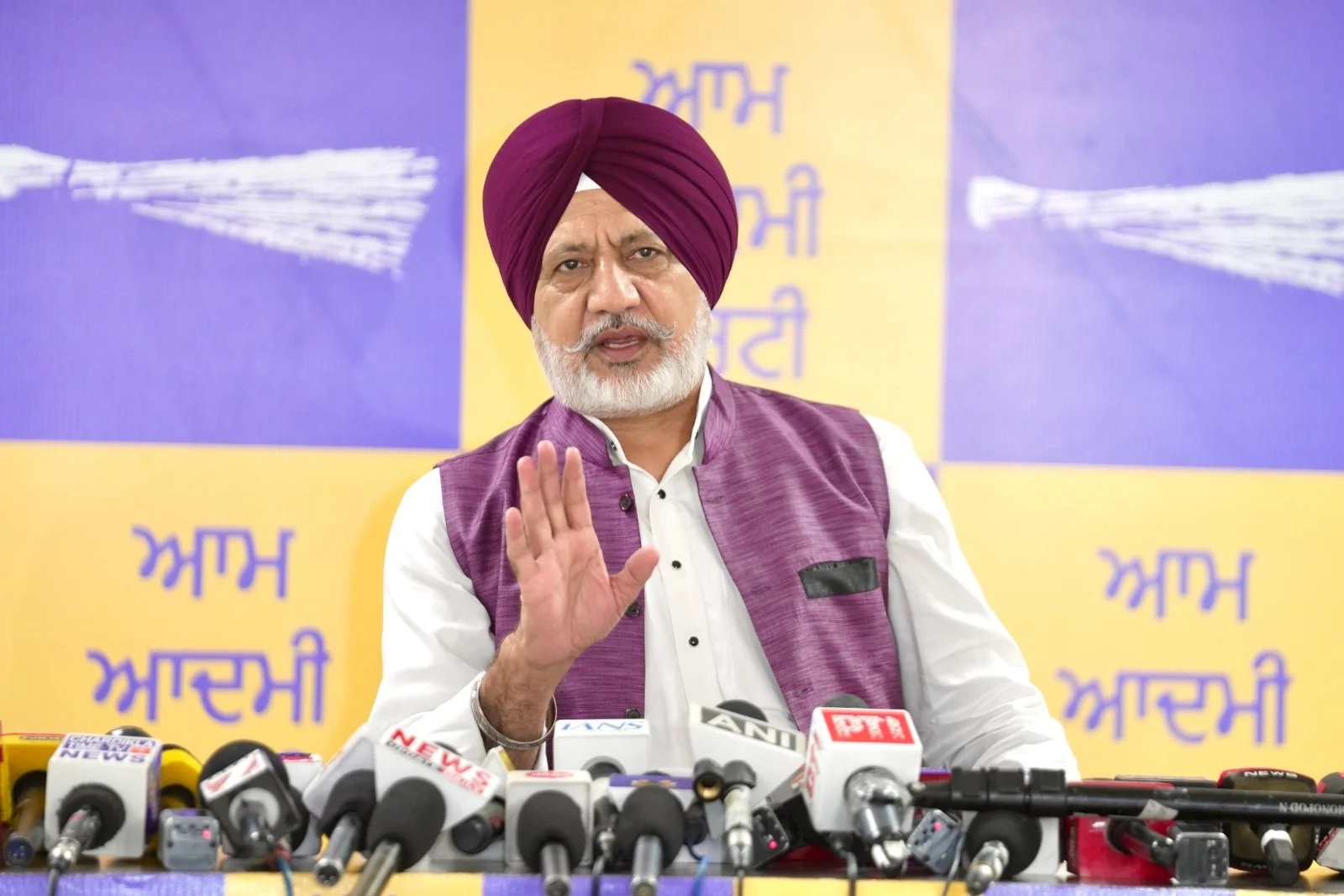


CHANDIGARH — Aam Aadmi Party Punjab Media In-charge Baltej Pannu affirmed on Monday that Central Ground Water Board statistics demonstrate a significant reversal in the state’s long-standing water crisis. Addressing media representatives in Chandigarh, Pannu stated that groundwater extraction rates dropped from 163.80 percent in 2022 down to 152.22 percent in 2026. He declared that political willpower and canal infrastructure planning under Chief Minister Bhagwant Singh Mann delivered measurable hydrological gains after decades of decline.
Party leaders maintained that former administrations relied on symbolic gestures rather than practical resource management. “For decades, we heard about the need to save Punjab’s waters,” Pannu stated, questioning previous governments on historical canal water allocations. “The question the opposition must answer is: where was this water going when they were in power?” he added, asserting that canal water usage expanded from roughly 21 percent to over 80 percent within four years.
Substantial infrastructure development across rural waterways directly enabled reduced tubewell pumping. Representatives declared that state departments restored over 400 kilometers of defunct canals, concrete-lined 1,000 kilometers of distribution channels, and reactivated 14,100 traditional watercourses. Pannu affirmed that overall annual extraction fell from 28.01 billion cubic meters to 26.32 billion cubic meters, with agriculture accounting for nearly 25 billion cubic meters of total draft.
Official statistics show that 95 out of 153 assessment blocks recorded environmental recovery across various districts. Pannu declared that four former dark zone blocks—Arniwala, Makhu, Hajipur, and Narot Jaimal Singh—successfully transitioned into safe categories. Party officials affirmed that sustainable canal recharge initiatives and dedicated governance will ensure long-term agricultural stability for future generations.