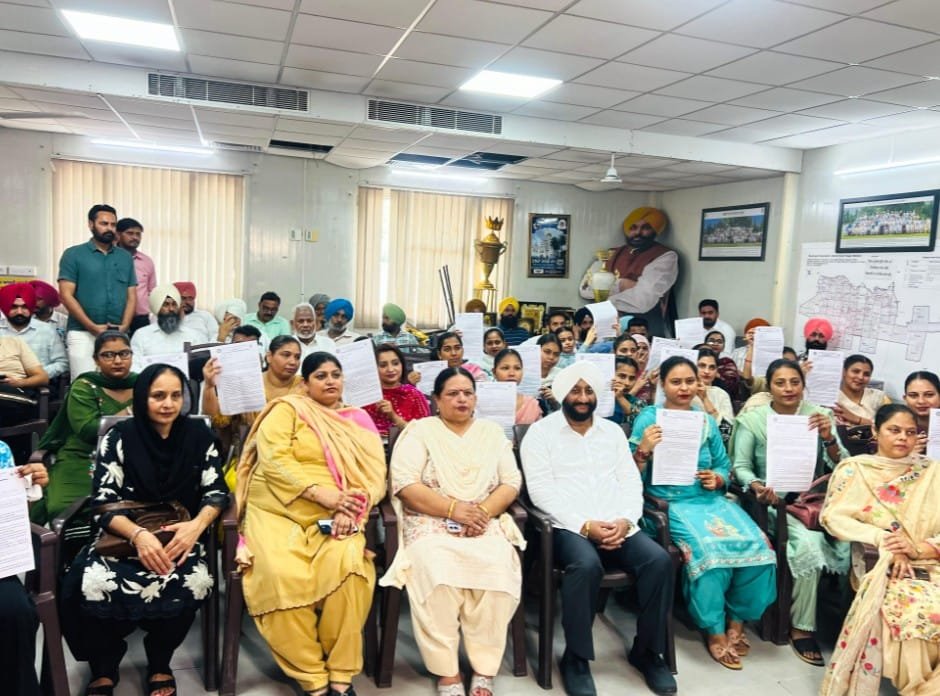


SAS Nagar, September 1: Thirty newly appointed Anganwadi Helpers received their appointment letters from Mohali MLA Kulwant Singh at his office in Sector 79 here on Monday.
Congratulating the appointees, Kulwant Singh called upon them to perform their responsibilities with dedication, sincerity and honesty, keeping the welfare of women and children at the centre of their duties.
Speaking to mediapersons, the MLA said the Punjab government, led by Chief Minister Bhagwant Singh Mann, had provided government employment to more than 70,000 youths so far. He claimed that the appointments had been made entirely on merit, without discrimination, recommendation or bribery.
Kulwant Singh said the recruitment achievement had been accomplished in around four-and-a-half years and asserted that the government would continue to provide employment opportunities to eligible candidates through a merit-based process. Simultaneously, efforts were being made to expand employment opportunities for young people in the private sector as well, he added.
Describing the recruitment of such a large number of youths through a transparent process as a significant achievement in the post-Independence period, the MLA said the government remained committed to creating more opportunities for the younger generation.
On the functioning of Anganwadi centres, Kulwant Singh said the facilities would be upgraded further and new centres would be established wherever required. The objective, he said, was to ensure better services for women and children.
The MLA also highlighted initiatives in the healthcare and education sectors. He said more than 1,000 Aam Aadmi Clinics had been established across Punjab, providing free medical consultation, essential diagnostic tests and medicines.
On government schools, he said the state government had undertaken extensive improvements in infrastructure and facilities. Schools that lacked boundary walls had been provided the necessary infrastructure, while staff and modern facilities such as LED screens and computers were being made available to promote technology-enabled learning.