

Opinion by Raj Kumar Bhagat, President, Chamber of Food Processing Industries (CFPIA)
Inscriptions fade and old buildings fall into disrepair, yet taste continues to pass forward through the hands of generations. Uttar Pradesh possesses an immense treasure of heritage filled with vibrant flavors. Banaras’ Malaiyo, Lucknow’s chaat, Agra’s petha, Mathura’s peda, Kannauj’s rose water, and Hathras’ asafoetida are far more than mere food items; they serve as living documents of history. Until recently, these culinary treasures remained confined to narrow lanes, neighborhood markets, regional fairs, and the fond memories of travelers. For the first time, they have been placed on the global trade table with complete seriousness. By placing ‘One District-One Cuisine’ (ODOC) at the core of the Uttar Pradesh International Trade Show, the Yogi government declared that heritage is not a burden, capital and tradition are not signs of backwardness, and local culture forms the foundation of self-reliance.
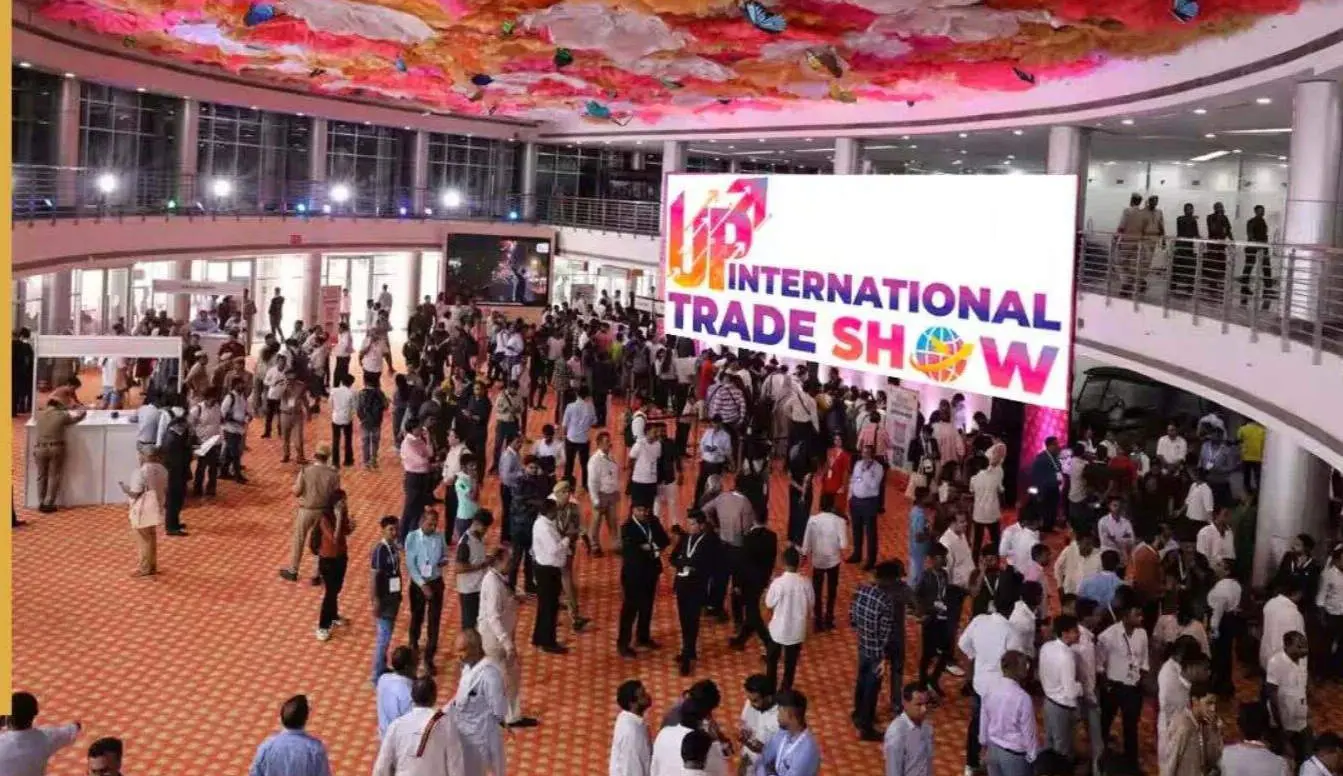
This initiative extends a broader vision that originated with One District-One Product (ODOP). The underlying argument of the government remains straightforward: when a district’s identity receives formal branding, expanded market access, and structured policy support, an artisan’s skill evolves into an industry and a local product becomes a global commodity. The national slogan ‘Vocal for Local’ transforms into a practical action plan for entrepreneurs across all 75 districts. Through this strategy, Uttar Pradesh seeks to position itself as a major producer and exporting power. At the trade show, over 600 buyers representing 90 countries witnessed the true strength of the state’s local production capabilities.
ODOC holds immense potential for international trade due to the surging worldwide demand for authentic, natural food products. Three key factors work directly in favor of ODOC: the vast population of the Indian diaspora, the growing global acceptance of Indian cuisine, and an increasing consumer preference for premium and organic goods. From the Gulf region to Europe and North America, buyers now seek to purchase authenticity and trust alongside taste. Uttar Pradesh’s regional cuisines offer both qualities, and the local food industry is actively transitioning toward standardization, upgraded packaging, and enhanced logistics. Modern infrastructure, including Jewar International Airport and the expanding expressway network, serves as the vital backbone of this movement. Furthermore, the trade potential of ODOC closely aligns with ODOP, where numerous GI-tagged products are centered around food.
The true dimension of ODOC extends beyond simple economic figures. It embodies the concept that a clear development path emerges by remaining deeply connected to one’s roots. Halwais, farmers, dairy producers, and women entrepreneurs working in self-help groups form essential links in this unified chain, where culture and the economy act as natural companions. Just as ODOP brought structure and new markets to traditional crafts like locks, carpets, chikankari, and pottery, ODOC applies the exact same principle to the culinary world. This initiative strives to afford the centuries-old food traditions of all 75 districts a global identity, shaping them into a well-organized food economy.
Historically, the reach of these regional foods was restricted to local fairs, domestic tourists, and town markets. UPITS has taken a bold step to break through those boundaries by presenting these products directly to global buyers, trade delegates, major food chain operators, and international retail enterprises. When a foreign buyer tastes these classic dishes and recognizes the commercial possibilities behind them, the outdated image of simple ‘street food’ dissolves. A local halwai who previously served customers within his immediate town can now envision his goods reaching store shelves across the Gulf, Europe, or America, marking a genuine revolution in local entrepreneurship.
Competing in the global marketplace requires more than superior taste, as every product undergoes rigorous evaluation for standardization, safety, and operational consistency. To meet these demands, the Uttar Pradesh government and the MSME Department are establishing a comprehensive support framework built upon four foundational pillars:
The first pillar focuses on packaging innovation and shelf-life extension. The primary obstacle in exporting traditional sweets has been their tendency to spoil quickly. Working alongside the Central Food Technological Research Institute (CFTRI), researchers are developing advanced preservation technologies that allow traditional items to remain fresh for months without relying on harmful preservatives.
The second pillar centers on international standards and official certifications. Successfully penetrating foreign markets requires adherence to standards set by the Food Safety and Standards Authority of India (FSSAI), along with HACCP (Hazard Analysis Critical Control Point) compliance, ISO certifications, organic verification, and GI tagging. Local artisans, halwais, and processing units are receiving financial assistance and technical direction, recognizing that international buyers conduct business based on official certification rather than informal trust.
The third pillar emphasizes modern branding and digital marketing strategies. Modern consumers frequently purchase the story behind a product alongside the physical item. Incorporating QR code-based packaging allows buyers to instantly access detailed information regarding a product’s origin, ingredients, and cultural authenticity.
The fourth and most decisive pillar involves direct export assistance and integrated logistics. Key components include streamlined export procedures, export credit subsidies, and a robust cold-chain infrastructure. The combination of Jewar International Airport and the expansive highway network enables perishable items to reach international destinations in minimal time. Because time represents the greatest capital in food exports, this physical infrastructure safeguards product value.
Significant operational challenges still remain to be addressed. Securing access to financial loans, government subsidies, and specialized training programs must become far simpler for local producers. Unwavering attention must also be paid to maintaining authenticity, precise standardization, and product consistency. While securing a one-time export order marks an initial achievement, building true reliability demands a continuous, regular supply chain supported by stable raw-material availability, rigorous quality controls, and a dependable cold chain.
Despite these hurdles, the broader socio-economic potential of ODOC remains immense. The food processing sector stands out as one of the few industries where ventures can launch with minimal capital using existing traditional skills, generating employment directly at the grassroots level. As a district’s signature cuisine gains recognition as a global brand, financial benefits flow down to farmers, dairy vendors, dry-fruit suppliers, halwais, packaging providers, transport companies, and local tourism operators.
Furthermore, the initiative opens massive possibilities for food tourism. A visitor or business buyer who tastes Agra’s petha or Banaras’ lassi naturally develops a curiosity to explore the historic lanes where those flavors originated. Consequently, ODOC functions as a strategic partner to the state’s broader tourism industry. The prominent spotlight given to ODOC at UPITS marks an encouraging beginning on a longer journey ahead. While ODOP successfully brought the physical skills of artisans into the global spotlight, ODOC aims to deliver that same respect and economic success to the state’s rich culinary heritage.