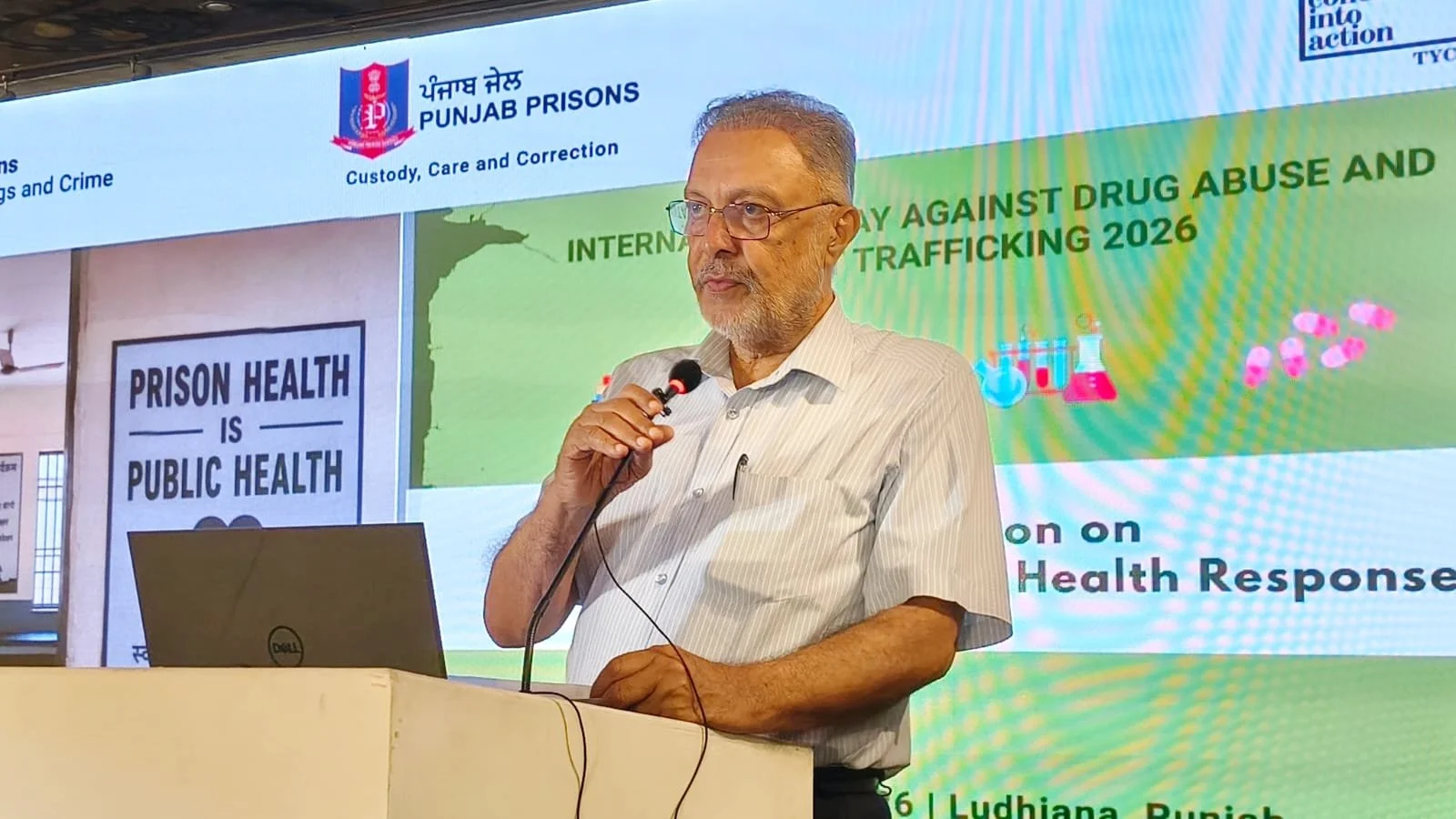


Ludhiana, June 28: The Punjab Government is transforming state prisons into active recovery and treatment spaces by deepening its collaboration with the United Nations Office on Drugs and Crime. A high-level stakeholder consultation held in Ludhiana on Friday brought together national experts and state administrators to establish a comprehensive, rights-based approach to prison health, substance abuse, and HIV management. The initiative marks a collaborative effort between the UNODC, the Punjab Prisons Department, and the NGO TYCIA to align local correctional facilities with global healthcare standards.
Decriminalisation of addiction remains a central pillar of this ongoing structural transition. Over ten thousand individuals struggling with substance abuse were routed to dedicated treatment centres over the past fifteen months rather than facing traditional incarceration. Additionally, extensive health screenings have already covered twenty-five thousand inmates across the state to track and treat hepatitis, HIV, and active dependency.
Health and Family Welfare Minister Dr. Balbir Singh affirmed the administration’s intent to view substance users through a medical lens rather than a purely punitive one.
“There is a clear distinction between patients and peddlers,” Dr. Balbir Singh stated. “We believe that jails should function not merely as correctional institutions but also as places of treatment, rehabilitation and recovery. Punjab already has a network of OOAT clinics across prisons, helping inmates manage and recover from addiction.”
The state is simultaneously addressing social reintegration by coupling healthcare with professional development, deploying specialized counselors alongside technical skill courses. This holistic framework is designed to ensure that recovery continues seamlessly once an individual returns to society. Experts at the event introduced innovative educational tools, including targeted interactive games, to train prison staff on the nuances of managing communicable diseases and withdrawal symptoms.
The strategy also aims to pioneer new models for reformative justice on a national level. Jail Minister Dr. Ravjot Singh declared that the state’s high conviction rates under the NDPS Act must be matched by an equally robust commitment to patient care and rehabilitation.
“Eradicating drugs from society and supporting every addict through adequate healthcare go hand in hand,” Dr. Ravjot Singh asserted.
The consultation focused heavily on specific vulnerabilities within custodial settings, dedicated sessions to gender-responsive health services, reproductive care for incarcerated women, and the intersection of physical disabilities with substance use disorders. UNODC representatives provided international protocols to guide these local policy adjustments.
Ms. Seema Joshi, Criminal Justice Expert with the UNODC Regional Office for South Asia, maintained that modern responses must evolve alongside the shifting nature of the global drug problem.
“Today is not only about acknowledging the impact of drugs on individuals, families and communities, but also about promoting solutions, partnerships and hope,” Ms. Seema Joshi declared. “Strengthening prison health, drug treatment and HIV services is a critical part of that response, helping individuals recover and reintegrate while building safer and healthier communities.”