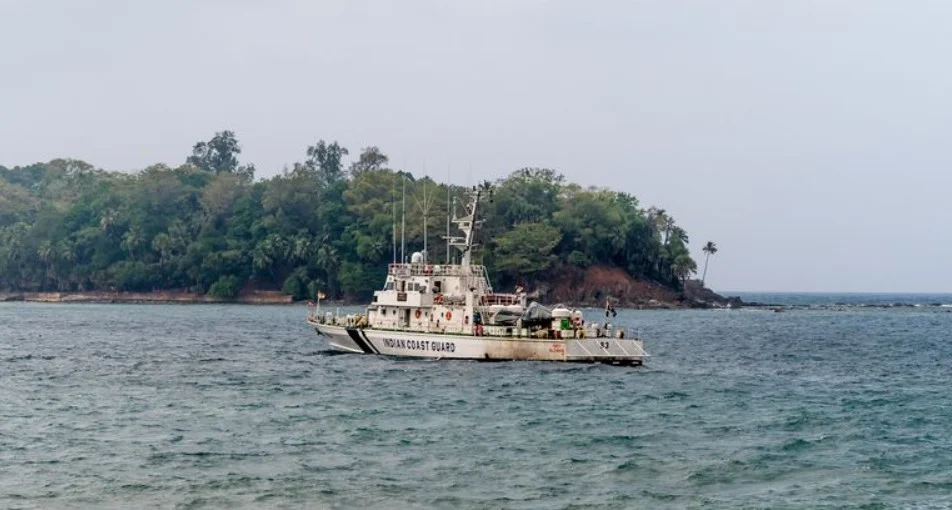


New Delhi, Feb 17: India has stepped up its maritime enforcement by deploying dozens of ships and aircraft to monitor its territorial waters following the seizure of three sanctioned oil tankers earlier this month. The vessels, which are linked to Iranian trade, were detained after authorities identified suspicious movements consistent with illicit ship-to-ship cargo transfers.
The strategy behind the increased surveillance is to prevent the country’s maritime zones from being used to facilitate the sale of sanctioned oil at discounted rates. Intermediaries often use false documentation and mid-sea transfers to move these goods. To counter this, the Indian Coast Guard has committed a force of 55 vessels and 10 to 12 aircraft to provide constant coverage of the region.
“India aims to prevent its waters from being used for ship-to-ship transfers that obscure the origin of oil cargoes,” the source declared. The source also explained that the tankers, which include the Stellar Ruby, Asphalt Star, and Al Jafzia, frequently utilized identity-evasion tactics.
The Asphalt Star has primarily operated on routes around China, while other vessels in the group have been traced back to Iranian ports. While an initial public report of the interception was briefly shared by authorities on February 6 and then removed, officials have since confirmed the tankers are currently held in Mumbai.
The National Iranian Oil Company addressed the seizures through state-run media channels. The company stated that the three tankers seized by India had no connection to the firm. It further asserted that no link exists between the company and the specific cargoes found on the ships.
This enforcement action coincides with evolving trade relations between New Delhi and Washington. Recent agreements regarding energy imports have led to adjustments in tariff structures, influencing how India manages its maritime boundaries. Investigative teams are now focusing on the overseas owners of the vessels to determine the full extent of the trade network.