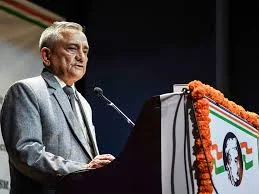


NEW DELHI, SEPTEMBER 6: Former Chief of Defence Staff General Anil Chauhan has called for a broader approach to India-China relations, saying the bilateral engagement between the two major Asian powers should not remain confined to the unresolved boundary dispute.
At the same time, Gen Chauhan stressed that India must maintain sustained vigilance along the Line of Actual Control (LAC), backed by credible military capabilities, clearly defined agreements and strict adherence to commitments made by both sides.
He made the remarks while delivering the 22nd G.B. Pant Memorial Lecture on “Threats and Challenges to India’s Security” at the Teen Murti Bhawan complex in New Delhi.
Describing China as a long-term and comprehensive challenge for India, the former CDS said the boundary question remains unresolved and that the two countries do not even have a mutually accepted understanding of the entire LAC.
He pointed out that differing perceptions of the LAC, rapid infrastructure development and the deployment of forces in forward areas could continue to generate friction and create risks of escalation.
According to Gen Chauhan, preserving peace along the frontier requires India to remain alert while simultaneously maintaining credible defence capabilities and ensuring that existing agreements are implemented consistently.
India-China Engagement Should Go Beyond Boundary Question
Gen Chauhan said India and China are not only neighbouring countries but also major Asian powers, large economies and ancient civilisational states.
Their relationship, he observed, involves both cooperation and competition, making it necessary for India to look at the relationship from a wider strategic perspective rather than viewing it solely through the border issue.
He cited India’s participation with China in platforms such as BRICS and the Shanghai Cooperation Organisation (SCO) as examples of areas where engagement continues despite differences between the two countries.
The former CDS said the manner in which India and China manage their respective rise would have a significant impact on the future strategic landscape of Asia.
His observations come against the backdrop of diplomatic engagement between New Delhi and Beijing, including talks between National Security Adviser Ajit Doval and Chinese Foreign Minister Wang Yi under the Special Representatives mechanism.
The discussions have included the boundary question, including issues related to delimitation, as well as wider cooperation concerning trans-boundary matters.
Gen Chauhan also viewed the strengthening of military-to-military communication channels, including proposed hotlines and corps commander-level interactions, as constructive measures that could help prevent misunderstandings and manage tensions.
Global Security Environment Entering a Period of Uncertainty
Addressing the broader international security situation, Gen Chauhan said the global order is undergoing a major transformation.
He noted that traditional power equations are weakening while a new international order has yet to take a definite shape.
According to him, the emerging geopolitical environment is increasingly characterised by uncertainty and what some analysts describe as global “disorder”, a situation that could continue for some time.
He said countries are increasingly pursuing issue-based and transactional partnerships, making it difficult to permanently categorise nations as either friends or adversaries.
A country, he explained, could simultaneously be a trading partner, technology competitor and security collaborator in different areas.
India Must Remain Prepared for Multiple Security Challenges
Gen Chauhan highlighted the growing strategic importance of the Indo-Pacific, Eurasian region, maritime domain, cyberspace and outer space.
He said the changing character of global competition has increased the possibility of states resorting to coercion or the use of force to advance their interests.
While acknowledging the continuing importance of international law, he observed that its enforcement remains uneven and that powerful countries often interpret international norms through the lens of their own national interests.
He stressed that India must therefore remain prepared for a wide range of possible security scenarios.
The former CDS said self-reliance is an important element of national security, as stronger domestic capabilities can reduce vulnerabilities and provide greater strategic freedom.
At the same time, he emphasised that self-reliance should go hand in hand with diplomatic engagement and strategic partnerships with major global powers.
Pakistan Continues to Pose a Significant Security Challenge
On the western front, Gen Chauhan described Pakistan as a major and continuing security concern for India.
He cautioned that recent defence arrangements involving Pakistan could create a sense of confidence in Islamabad and potentially encourage strategic miscalculations.
The former CDS said terrorism and proxy warfare continue to remain important components of Pakistan’s approach towards India, underlining the need for credible deterrence.
He referred to India’s past military responses, including Uri, Balakot and Operation Sindoor, as examples of the country’s willingness to employ different levels of deterrence when confronted with cross-border security challenges.
Military Strength, Self-Reliance and Diplomacy Key to India’s Security
Gen Chauhan’s overall assessment was that India’s security strategy must combine strong defence preparedness, indigenous capability development, diplomatic engagement and strategic flexibility.
With the international system undergoing rapid change and traditional alliances becoming increasingly fluid, he stressed the importance of ensuring that India possesses the capabilities required to protect its national interests under different circumstances.
His remarks underline the need for India to maintain a delicate balance between managing immediate security challenges and pursuing long-term strategic engagement with major powers, particularly China, while remaining prepared to respond firmly to threats along both its eastern and western fronts.