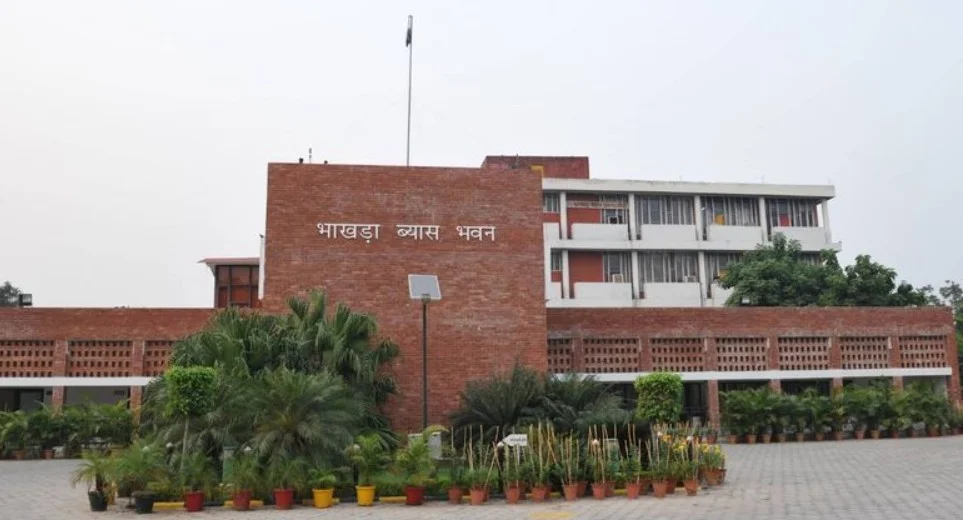


CHANDIGARH, June 9 — The Bhakra Beas Management Board on Tuesday requested its partner states, including Punjab and Haryana, to accelerate their water withdrawals from the Bhakra reservoir as the region’s agricultural sector enters the peak paddy transplantation phase. The directive follows a Technical Committee meeting at the board’s headquarters, where officials cited elevated storage levels and incoming seasonal inflows as primary factors for the adjustment.
Board data presented during the session showed that the water level at the Bhakra reservoir reached 1,578.07 feet on June 9, 2026. This metric is 21.47 feet higher than the 1,556.60 feet recorded on the same date during the previous calendar year, and stands well above the long-term historical average of 1,543.72 feet set for this specific period.
The technical panel noted that the current storage capacity leaves limited buffer space to handle heavy seasonal weather events. Emphasizing the need for proactive water management ahead of the summer rains, a representative from the board’s technical team stated:
“The board stressed the need to utilise available water, citing relatively high storage levels in the Bhakra reservoir and the likelihood of fresh inflows from snowmelt and the upcoming monsoon.”
The reservoir currently holds 1.75 billion cubic meters of live storage, meaning it is 31 percent full compared to the 22 percent capacity reported on June 9, 2025. Despite the widespread commencement of paddy sowing across northern fields, actual water releases from Bhakra are hovering at 20,763 cusecs, marking a significant drop from the 30,528 cusecs discharged at this point last year.
Engineering reviews during the meeting also addressed long-term structural maintenance concerns, noting that keeping the water at highly elevated levels for extended intervals subjects the dam to continuous hydraulic pressure. With the Sutlej catchment zone spanning approximately 58,000 square kilometers, the management board stated that drawing down the excess supply now will help generate an adequate flood cushion to moderate sudden inflows from potential cloudbursts or heavy monsoon downpours.