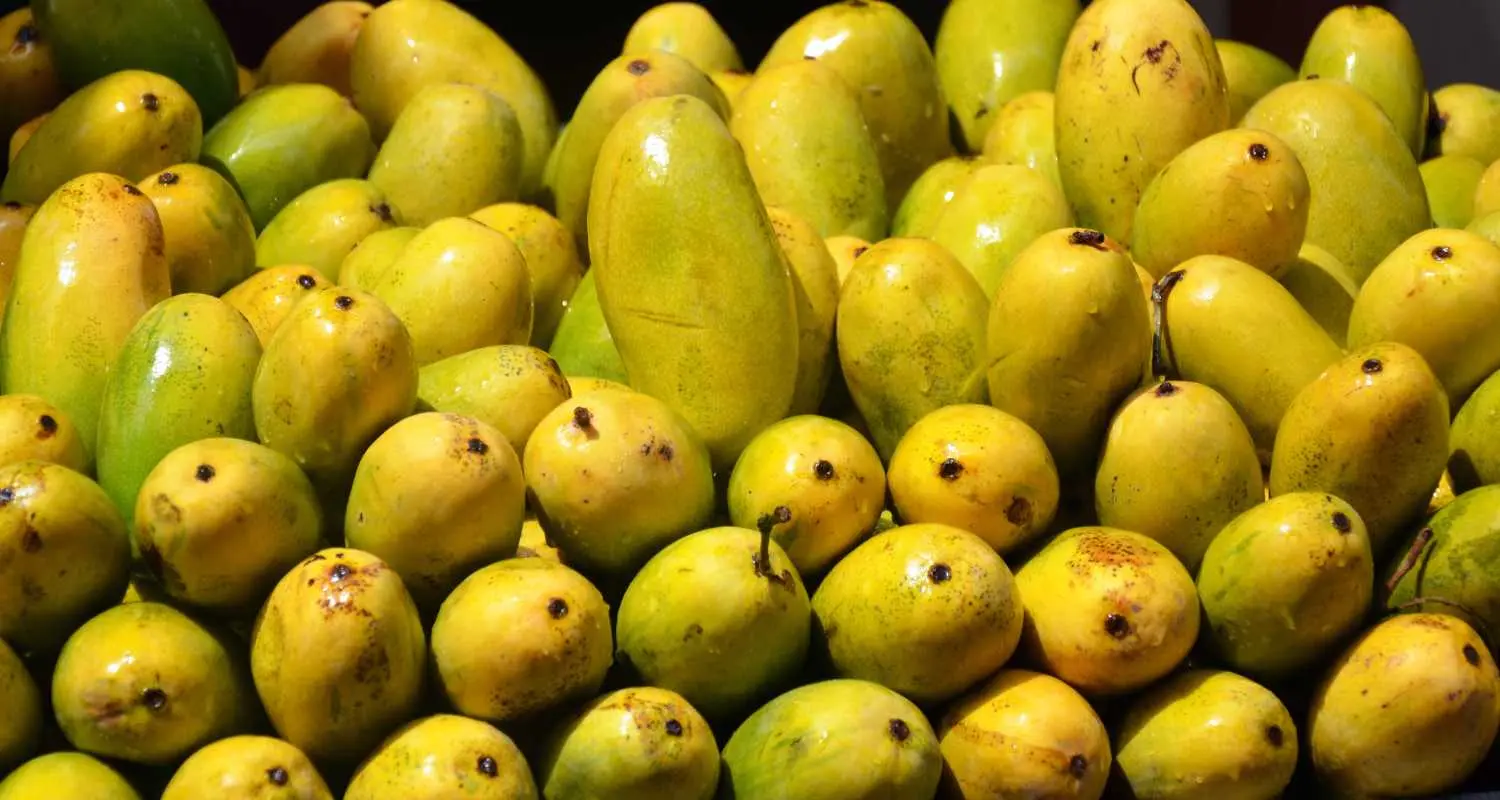


KATHMANDU, JUNE 11 — The government of Nepal clarified Wednesday that it has not placed an import ban on Indian mangoes, countering recent media reports regarding trade restrictions at the border.
The Plant Quarantine and Pesticide Management Centre, operating under the Ministry of Agriculture, Forest and Environment, stated that fruit shipments continue to receive entry clearance based on market demand. Officials explained that recent border delays were caused by technical biosecurity evaluations rather than a trade halt. Entry remains contingent on standard regulations and necessary paperwork, authorities noted.
The policy clarification followed an incident where a large shipment of mangoes from India was held at the Bhittamod Quarantine check post in Madhes province. Inspectors temporarily stopped the cargo over concerns regarding potential pest contamination.
“The consignment has now been released following the issuance of a plant health certificate from Indian authorities,” said Manish Kumar Pal, spokesperson for the Ministry of Land Management, Agriculture and Cooperatives of Madhes Province.
Domestic business leaders previously warned that a prolonged halt on imports would trigger severe shortages in local markets. Bhuvaneshwar Purbe, general secretary of the Fruit and Vegetable Traders’ Association in Janakpurdham, stated that local production cannot fulfill total domestic demand. While Janakpurdham receives more than 50 tonnes of mangoes from neighboring districts for distribution to Kathmandu and other national hubs, the volume remains insufficient without cross-border trade.
Purbe noted that the government should prioritize updating its quarantine testing facilities along border stations to ensure food safety instead of stopping shipments completely.
Biosecurity measures remain active to prevent invasive species from entering the country under the Plant Quarantine and Protection Act 2064 Bikram Samvat. The ministry stated that current protocols require all incoming Indian mango shipments to undergo a hot water treatment process, where the fruit is submerged at up to 48 degrees Celsius for one hour to neutralize potential bio-hazards.