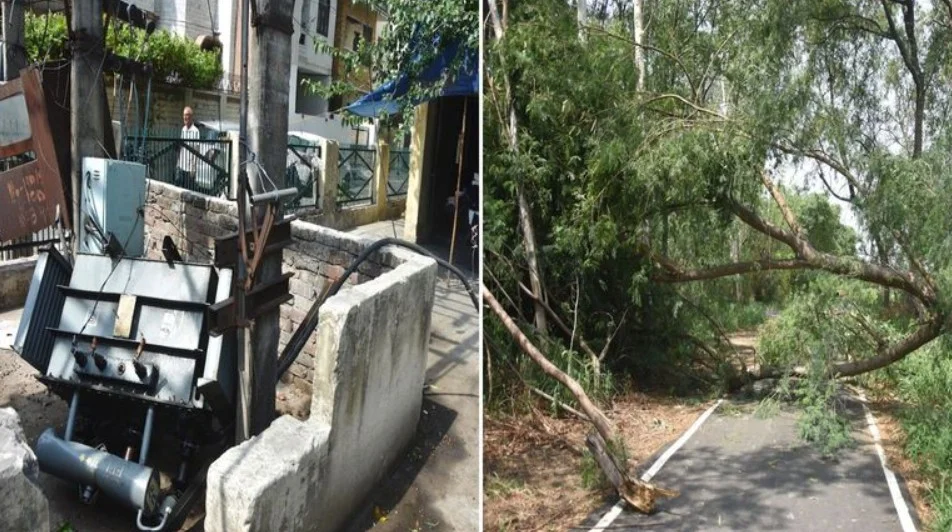


Chandigarh, June 13: A severe multi-day storm carrying high-velocity winds and thunderstorms across Punjab has inflicted an estimated Rs 19.54 crore in damages on the state’s electricity distribution infrastructure.
The widespread environmental disruption shattered thousands of supporting structures, leaving localized grids compromised and causing prolonged power blackouts in several regions. According to initial evaluations by the Punjab State Power Corporation Limited (PSPCL), the operational losses represent one of the most severe financial hits the public utility has encountered in recent years, with the Border and Central Zones bearing the brunt of the destruction.
Field teams deployed immediately to address broken components, managing to restore connectivity to almost all affected locations within 36 hours. The severe weather also altered regional consumption dynamics, causing the state’s total electrical load to crash from 14,000 MW to approximately 3,170 MW in a brief window on Thursday evening, which created a massive 3,700 MW supply imbalance on the regional grid.
To preserve regional grid stability amidst the sudden drop in demand, system engineers adjusted production downward at several major thermal generation plants.
“Transformers, electricity poles and trees were uprooted, which led to power failure in many parts of the state,” a PSPCL official stated regarding the emergency scenario. “The utility was flooded with complaints, and certain areas faced power cuts for more than 10 hours.”
The physical toll on the network includes the destruction of more than 8,492 support poles, 1,466 step-down transformers, four kilometers of high-tension lines, and over 220 kilometers of low-tension wiring assets. Despite the infrastructure strain, the accompanying precipitation provided minor operational relief to the agricultural sector by naturally hydrating fields as the critical paddy transplantation phase begins, reducing the immediate reliance on rural tubewells.