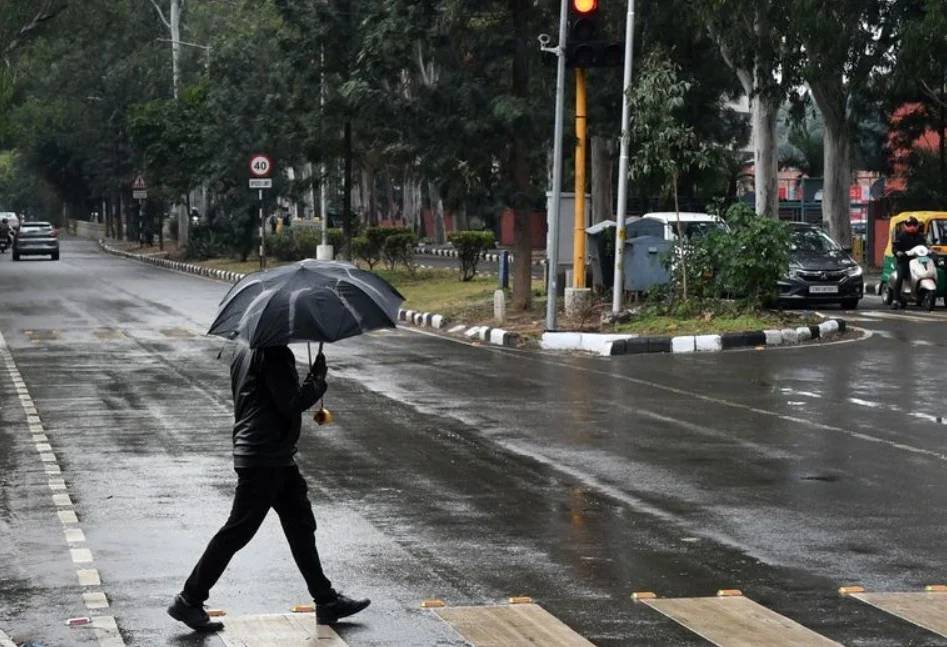


CHANDIGARH, May 1— Residents across the Chandigarh tricity, Punjab, and Haryana should prepare for a sustained spell of unstable weather, with the India Meteorological Department (IMD) issuing a yellow alert for thunderstorms and rain starting Saturday. The forecast, which extends through next Thursday, suggests that the intense heatwave recently gripping the region has been effectively broken by a series of western disturbances.
Following a dry Friday characterized by partly cloudy skies, the weather is expected to shift significantly over the weekend. The IMD stated that isolated areas can expect lightning and gusty winds reaching speeds of 30 to 50 kilometers per hour. While temperatures may rise by roughly 2 degrees Celsius in the next 48 hours, a sharper decline of three to four degrees is anticipated thereafter, maintaining a reprieve from the summer heat.
“The India Meteorological Department has sounded a yellow alert for thunderstorm, lightning and gusty winds… from Saturday, valid through Thursday,” an official weather report affirmed. This follows an exceptionally wet April, which was recorded as the city’s wettest in 13 years, with seasonal rainfall currently standing at 135 percent above the normal average.
The recent cooling trend has already made a marked impact on local conditions. On Friday, the maximum temperature in Chandigarh settled at 35.2 degrees Celsius—over 2 degrees below the seasonal average. Overnight temperatures have also returned to comfortable levels, with the mercury dipping to 19.8 degrees Celsius, providing residents with much-needed relief during the late-night hours.
Meteorologists maintained that the upcoming week of scattered rainfall will continue to suppress the possibility of a returning heatwave. They affirmed that relative humidity levels, which reached 75 percent Friday morning, are expected to fluctuate as the new weather system moves through the plains. Authorities stated that while the rain brings relief, the public should remain cautious of lightning and high-speed winds during the active thunderstorm periods.