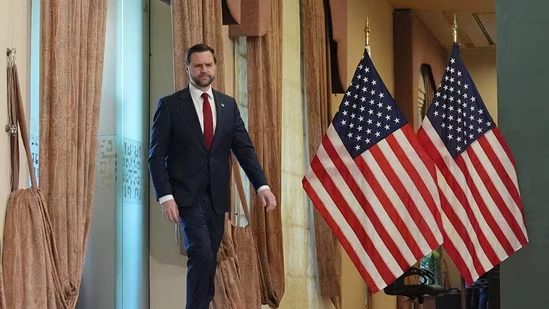


Washington, April 12: Diplomatic efforts between the United States and Iran ended without a resolution on Sunday after 21 hours of intensive negotiations in Islamabad. U.S. Vice President JD Vance, departing for Washington after the collapse of the talks, affirmed that a primary obstacle remains Tehran’s refusal to provide guarantees regarding its nuclear programme.
Throughout the marathon session, the American delegation maintained a direct line of communication with the White House. Vance stated that he consulted with President Donald Trump multiple times as the negotiations evolved. “We were talking to the President consistently. I don’t know how many times we talked to him — a half dozen times, a dozen times over the past 21 hours,” Vance declared. He maintained that the team also remained in constant consultation with Secretary of State Marco Rubio, Defense Secretary Pete Hegseth, and Treasury Secretary Scott Bessent.
The Vice President asserted that the administration’s “red line” involves a verified cessation of Iran’s uranium enrichment and a commitment to forgo nuclear weapons. He declared that Washington’s goal is to ensure Iran does not possess the tools to achieve nuclear capability rapidly. “The simple fact is that we need to see an affirmative commitment that they will not seek a nuclear weapon,” Vance maintained. He noted that the U.S. has left a final proposal on the table, describing it as the “final and best offer.”
Iranian representatives, however, characterized the American requirements as excessive. Mohammed Bagher Ghalibaf, Iran’s parliament speaker and lead negotiator, stated that while Tehran acted with goodwill, the American side failed to earn the delegation’s trust. He declared on social media that it is now up to Washington to decide if it can adopt a more logical approach. Iranian officials also noted that the Strait of Hormuz remains a point of significant friction, as U.S. warships recently transited the waterway during the fragile ceasefire.