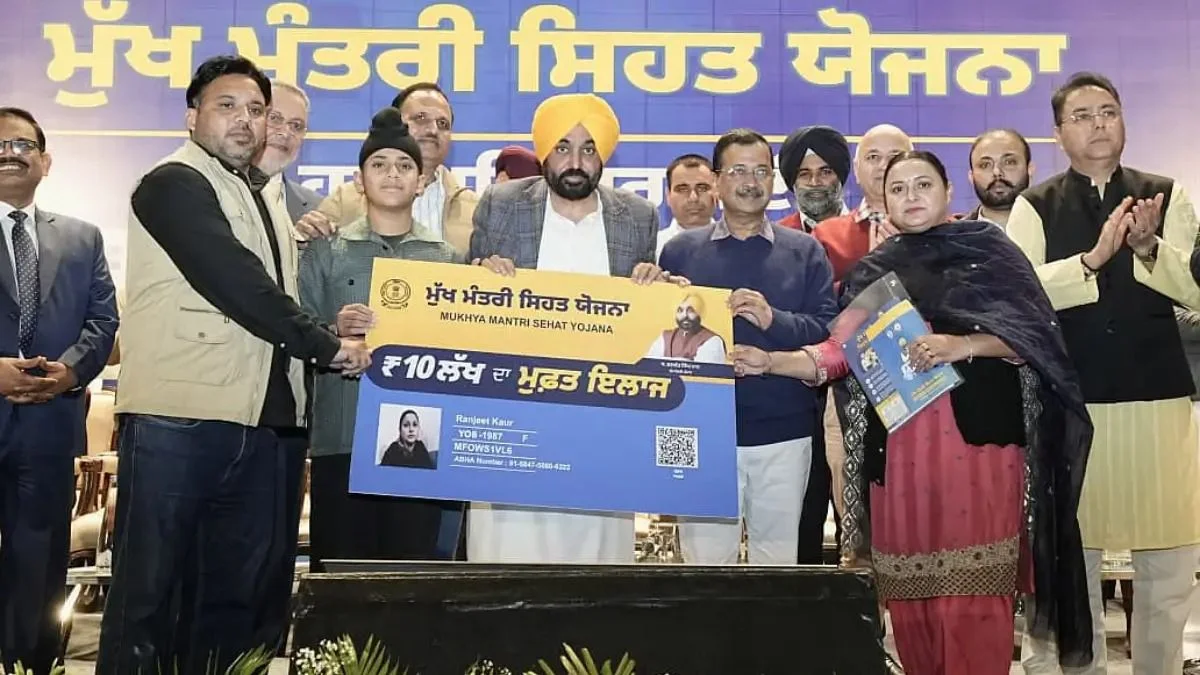


Chandigarh, July 1: The Punjab government has significantly expanded access to quality ophthalmic care through the Mukh Mantri Sehat Yojana, enabling thousands of patients to undergo life-changing vision procedures free of cost. Official data reveals that three thousand five hundred twenty-four patients have already received specialized eye surgeries across the state, utilizing financial coverage totaling nearly two crore rupees. The initiative has successfully minimized treatment delays and eased medical expenses for families, especially senior citizens facing vision impairment.
Health and Family Welfare Minister Dr Balbir Singh stated that the inclusion of empanelled private hospitals into the state network has brought advanced eye care closer to the public. He maintained that early medical intervention remains essential to prevent avoidable vision loss and improve the overall standard of living for residents.
“By expanding services to empanelled private hospitals as well, we are ensuring that more patients receive timely surgery without financial burden. Early treatment can prevent avoidable vision loss and significantly improve quality of life,” the Health Minister declared. He further urged the public to seek immediate medical attention for symptoms such as blurred vision, persistent irritation, or eyelid abnormalities to avoid long-term complications.
According to statistical records, cataract extraction remains the most widely performed procedure under the scheme, helping counter the leading cause of blindness among older demographics. Small Incision Cataract Surgery with non-foldable intraocular lens implantation was successfully performed on three thousand seventy patients, representing over eighty-seven percent of the total surgeries with claims reaching over one crore fifty-four lakh rupees. The state also fully funded three hundred thirty-three surgeries for Pterygium with Conjunctival Autograft, alongside specialized operations for glaucoma, squint correction, pediatric lens replacement, and tear duct blockages.
Dr Munish Dhawan, Professor and Head of Ophthalmology at GGS Medical College in Faridkot, asserted that the policy successfully removes financial barriers that previously forced elderly patients to delay critical treatments. He affirmed that modern techniques, including phacoemulsification with foldable lens implantation, are now accessible to everyone regardless of economic background. The medical expert also directed attention toward preventive measures, advising regular vision check-ups for children, routine screenings for individuals over forty, and continuous monitoring for diabetic patients to protect long-term eye health.