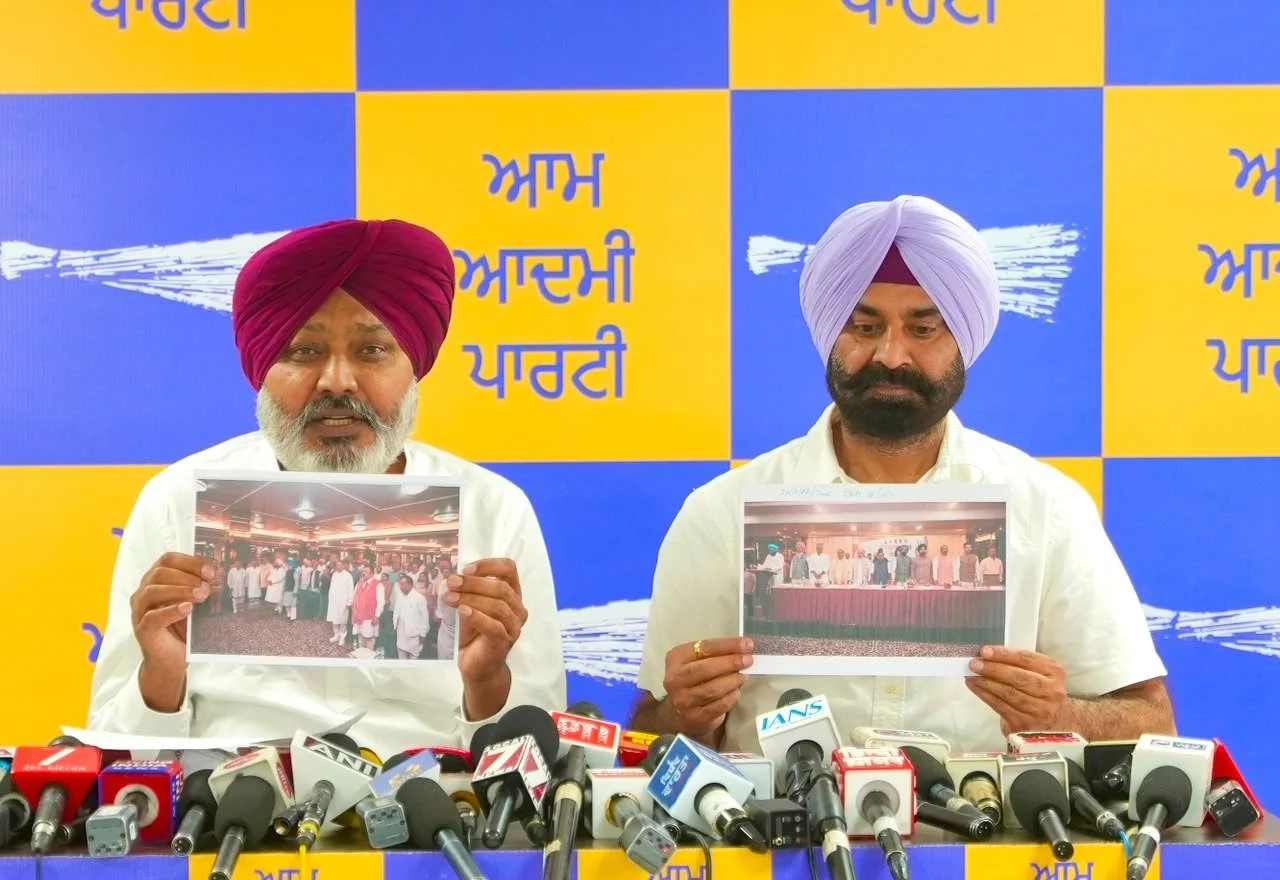


Chandigarh, June 24: The Bharatiya Janata Party’s treatment of marginalized communities has drawn strong criticism from the Aam Aadmi Party, following reports of senior Scheduled Caste leaders being sidelined during a recent political gathering in Punjab. The incident, which occurred during a visit by BJP National President Nitin Nabin, has sparked a broader debate over the party’s inclusivity and governance record regarding marginalized groups.
Senior AAP leader and Punjab Cabinet Minister Harpal Singh Cheema declared that the event showcased a discriminatory mindset. “During a recent party event in Punjab, senior SC leaders such as former Union Minister Vijay Sampla and former Union Minister Som Parkash were made to stand among the audience while top leadership was seated on stage,” Cheema stated during a press conference in Chandigarh alongside AAP Punjab SC Wing Chairman Gurpreet Singh GP. He maintained that leaders who have served for decades and represented the Scheduled Caste community were denied basic respect.
The critique expanded into national governance statistics, with the AAP leadership citing federal crime data to question the safety of marginalized communities under specific administrations. Cheema asserted that federal metrics indicate significant challenges in certain regions. “According to National Crime Records Bureau 2024 data, nearly 65 % of crimes against Scheduled Castes and Scheduled Tribes in the country were reported from four BJP-ruled states including Uttar Pradesh, Madhya Pradesh, Bihar and Rajasthan,” he affirmed, suggesting this reflects a wider systemic issue.
The political implications of these events are expected to resonate deeply within the state’s electorate, where Scheduled Castes constitute nearly 34% of the population. The AAP leadership suggested that the local community has closely observed these developments and will respond through democratic means. Cheema concluded that the public will not overlook the perceived slights against leaders who have contributed significantly to the region’s progress, promising a firm response to divisive politics in future electoral contests.